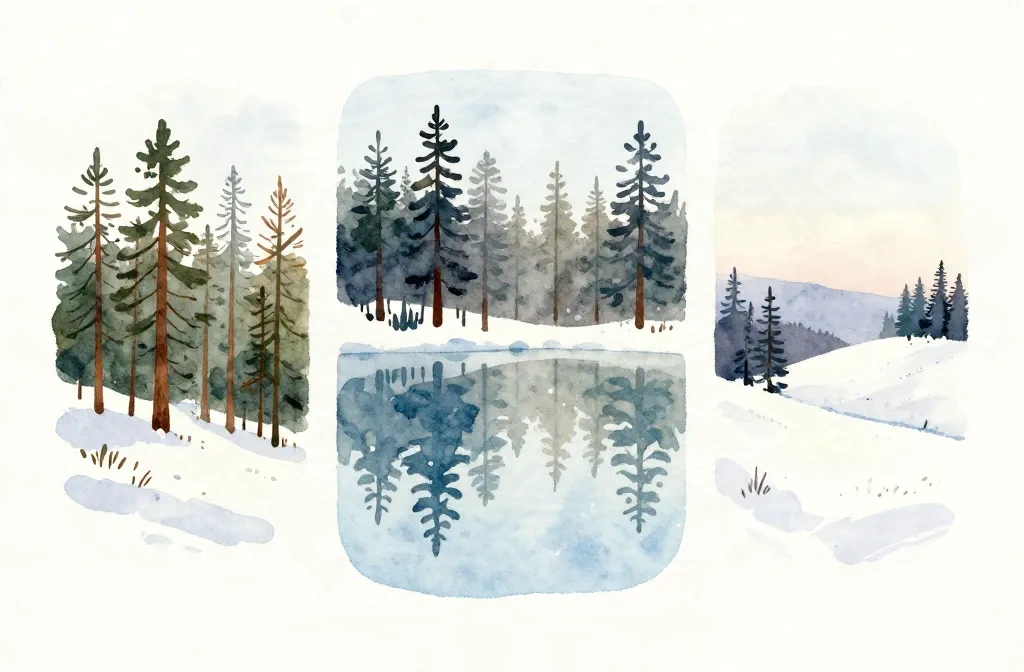
Want to capture the hush of a snowy day in watercolor? These 12 peaceful snowy landscape watercolor ideas are designed for calm, simple elegance.
Each idea emphasizes clean shapes, soft washes, and gentle contrast to keep the scene serene and instantly printable as a Pinterest pin.
You will find beginner friendly approaches, clear steps, and little details that elevate the mood without overcomplicating the scene.
1. Silent Pine Forest in Soft Snow
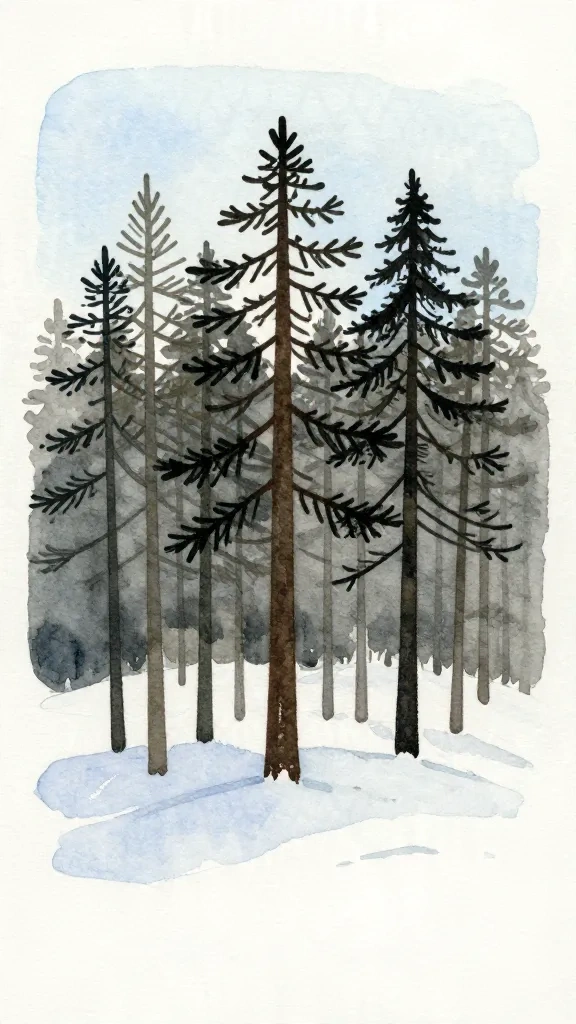
A row of tall pines against a pale sky creates a tranquil, graphic silhouette. The simplicity invites focus on shape and rhythm rather than busy detail.
How to Draw It
- Lightly sketch a flat horizon line and a gentle snowy ground plane.
- Draw a line of tall, slim conifers as elongated triangles with sparse branches.
- Paint a pale blue wash for the sky and a cool gray for distant trees to imply depth.
- Add a soft wash of cool tones to the snow and let the trees remain darker to stand out.
- Finish with a faint reflection line in the snow if you want a surface hint, but keep it subtle.
Closing: This idea trains you to balance solid trunks with airy negative space, creating a calm forest impression on the page.
2. Frozen Lake Reflections with Pine Shadows
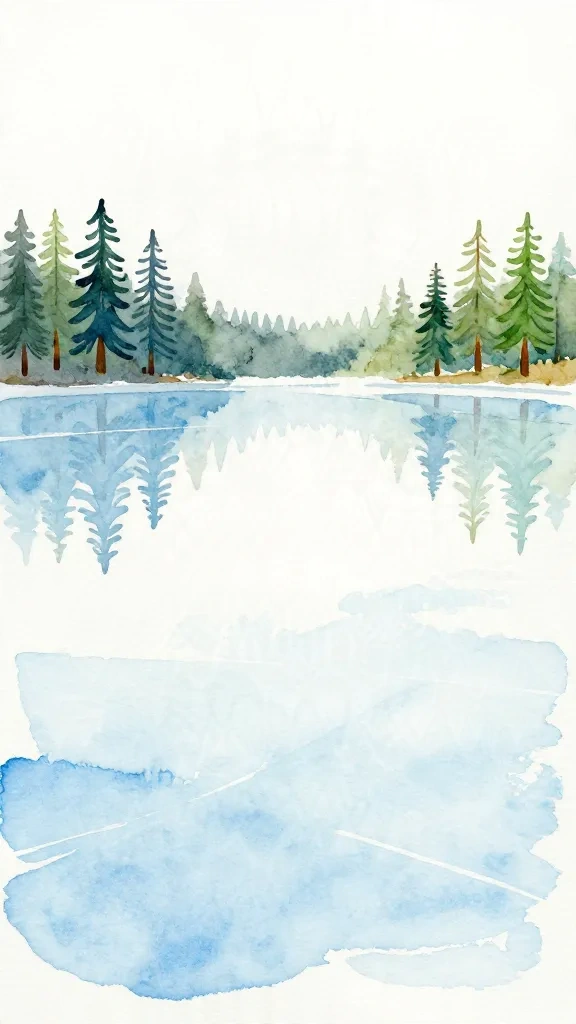
A still lake mirrors the pale sky and surrounding pines, producing a serene symmetry that is instantly soothing to viewers.
How to Draw It
- Sketch a straight horizon where the lake meets the distant shore.
- Place a row of pines along the far edge with soft, irregular shapes to suggest branches.
- Lay down a horizontal blue wash for the water, leaving some white gaps to show ice reflections.
- Paint the reflection of trees with slightly lighter tones and softer edges.
- Drop a cool wash across the ice to add a sense of chill and depth.
Minimalist details: minimal water ripples, a lone bird or leaf skimming the ice is optional but can add life without crowding the scene.
Closing: Focus on mirror-like symmetry and a restrained palette to keep the composition peaceful and easy to reproduce.
3. Cozy Snowy Cabin with Smoke
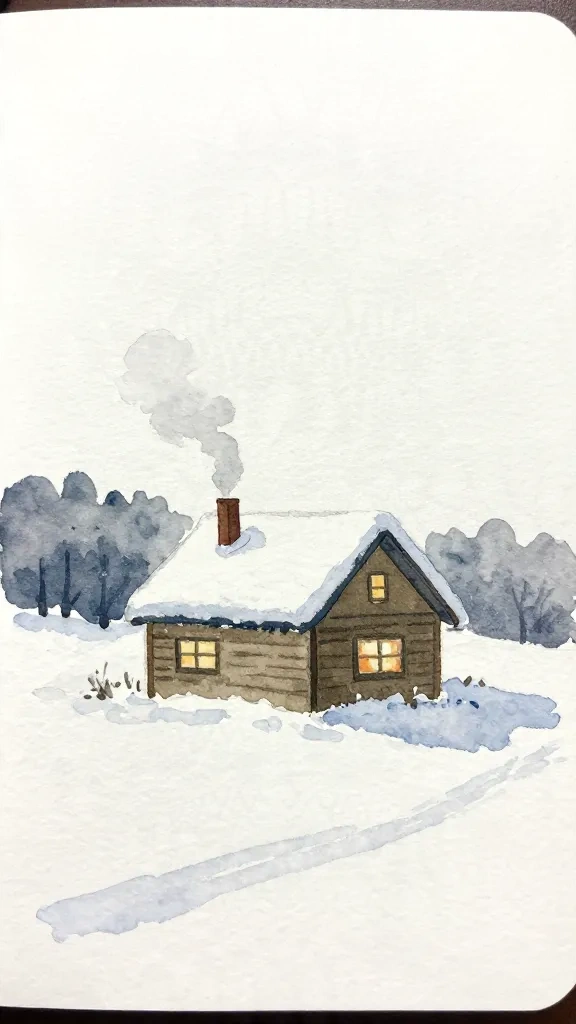
A small cabin tucked in snow with a curling wisp of smoke suggests warmth and quiet companionship with the landscape.
How to Draw It
- Draw a simple rectangular cabin with a pitched roof and a small chimney.
- Shade the roof and walls with cool gray blues to imply a snowy cover and shade.
- Paint a soft glow in the windows using warm ochre or amber tones.
- Use a light wash for surrounding snow and a slightly darker ground line for contrast.
- Suggest distant trees behind the house with soft, rounded shapes.
Minimalist details: a tiny smoke tail curling upward and a single snowdrift along the base of the cabin.
Closing: This idea emphasizes cozy atmosphere without clutter, making it ideal for a calming watercolor study.
4. Snow Covered Stone Bridge Over Quiet Creek
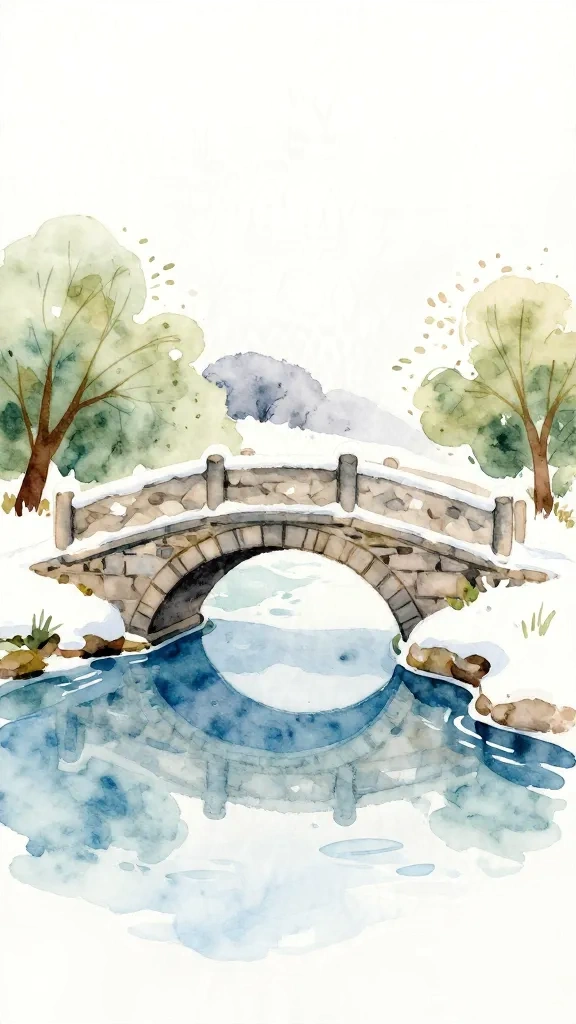
A small arched bridge over a narrow stream creates a focal point and a gentle sense of movement through the scene.
How to Draw It
- Outline a short stone bridge with a smooth arch over a narrow stream line.
- Paint the water with a cool blue wash and let the reflection of the bridge soften in the river.
- Block in distant trees with soft, rounded forms and gradients to imply distance.
- Add a light snow layer on the bridge and along its parapet.
- Sketch a distant hill or bank for balance in the composition.
Minimalist details: a few snow specks on the bridge and a gentle shadow along the water edge.
Closing: The bridge design teaches clean geometry and thoughtful placement to guide the eye naturally across the page.
5. Snowy Path Winding Through a Quiet Field
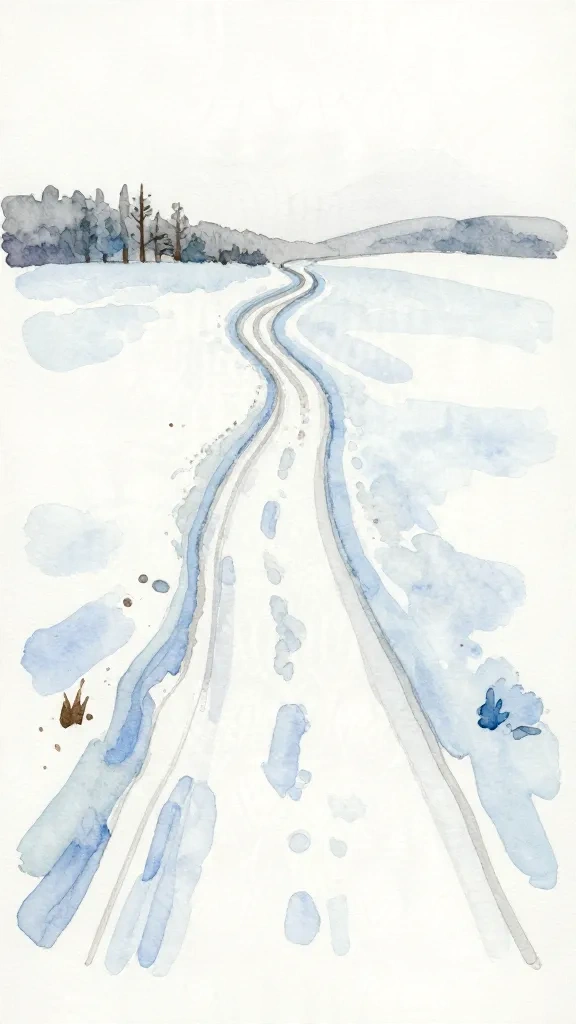
A lone winding path in fresh snow invites the viewer to step into the scene and follow the curve into distance.
How to Draw It
- Start with a gentle, winding path drawn as two parallel lines narrowing toward the horizon.
- Fill the field with smooth, even washes of pale blue and cool gray to imply depth.
- Scatter a few small trees or shrubs along the path to create rhythm.
- Use a thin pencil line or faint ink to define the path edges for clarity.
- Suggest distant hills with soft, misty edges behind the field line.
Minimalist details: a tiny fox or bird on the path can add interest without crowding the space.
Closing: A simple path becomes a strong anchor that enhances composition and balance in a tranquil winter scene.
6. Distant Snowy Mountain Range with Gentle Slopes
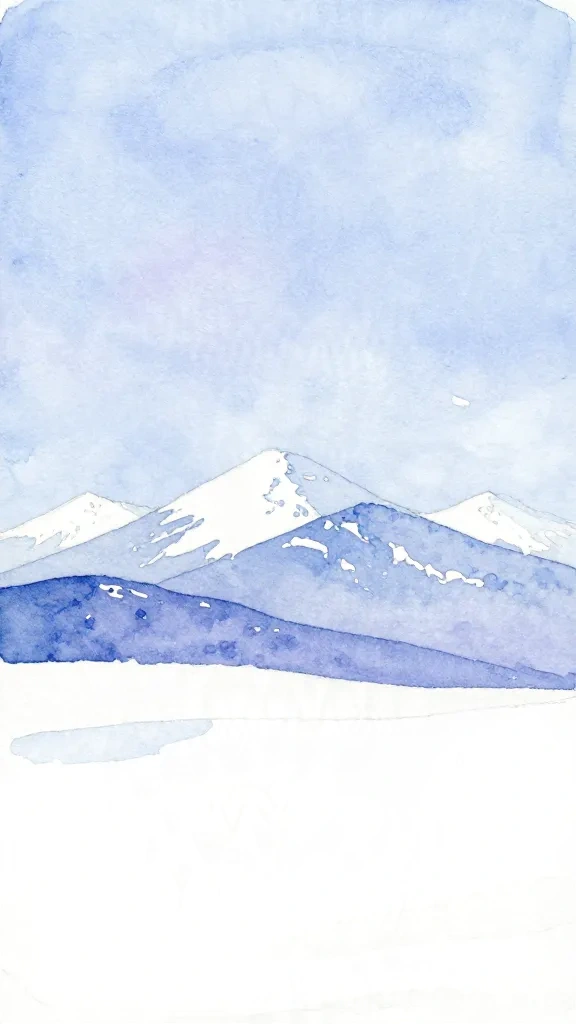
A soft, low angle of a distant mountain range painted with gentle gradients feels vast yet peaceful.
How to Draw It
- Sketch a distant horizon with a light, long line for the base of the mountains.
- Layer in mountain silhouettes with pale blues and violet shadows to indicate depth.
- Lay down a light wash for the sky with subtle color variation to avoid a flat look.
- Add a faint snow cap on the highest peaks using a soft white with minimal pigment.
- Keep the foreground simple to push the distance and create a sense of calm space.
Minimalist details: a few stray clouds or a delicate sun glow behind the peaks can add atmosphere without complexity.
Closing: This idea shows how distance and soft color shifts can convey a serene winter panorama with minimal elements.
7. Fence Posts in Fresh Snow with a Single Track
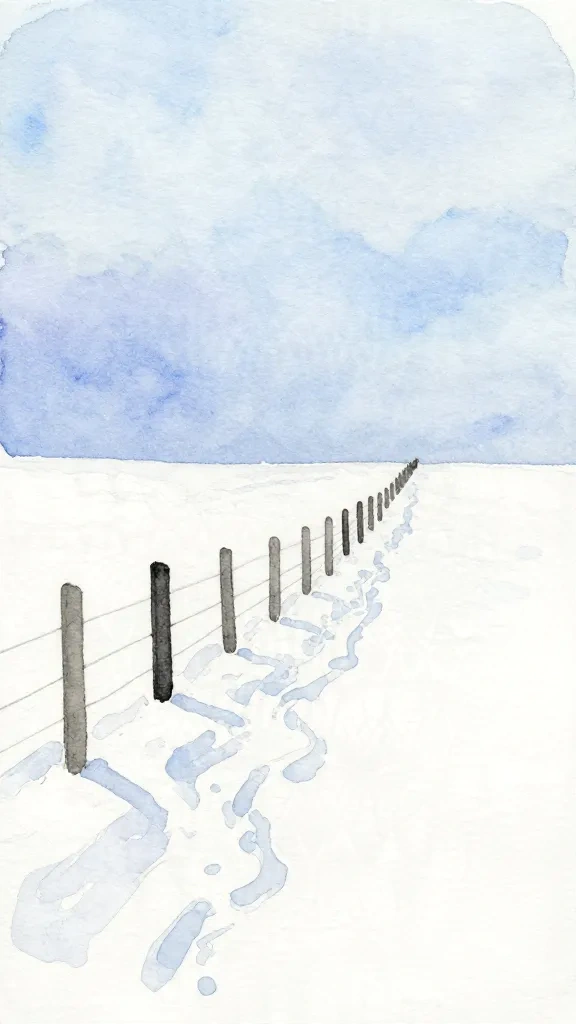
A line of fence posts marks a boundary through a snow filled meadow, drawing the eye toward a quiet horizon.
How to Draw It
- Sketch a straight fence line with evenly spaced posts receding toward the distance.
- Place a soft, uneven snow drape along the fence and across the ground plane.
- Paint the sky in pale cool tones; keep the color palette restrained.
- Use a darker gray for the posts to create crisp silhouettes against the snow.
- Suggest a faint shadow under the posts for grounding.
Minimalist details: a single set of boot tracks or a small bird motif between posts can add life without clutter.
Closing: The clean lines of the fence create a strong composition anchor while keeping the scene peaceful.
8. Willow Tree Overlooking a Snowy River Bend
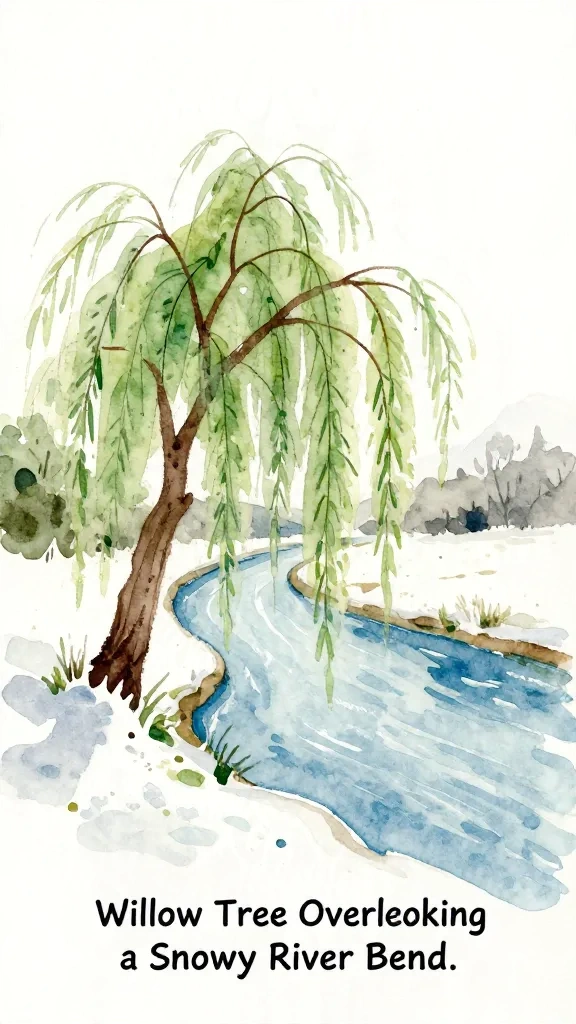
A graceful willow arch over a gentle bend in a river offers a poetic and minimal focal point.
How to Draw It
- Draw a curved river line with a light blue wash to indicate moving water.
- Place a single willow tree with draping branches along the bank, using elongated, loose strokes.
- Apply cool blues and muted greens to reflect the icy surroundings.
- Finish with snow on the riverbank and a faint shadow under the tree.
- Keep distant brushstrokes soft to maintain a sense of distance.
Minimalist details: a few snow beads on delicate branches emphasize the winter mood without crowding the scene.
Closing: This idea highlights a single bold silhouette and a tranquil water element for a calm, elegant composition.
9. Moonlit Snowy Hill and a Distant House
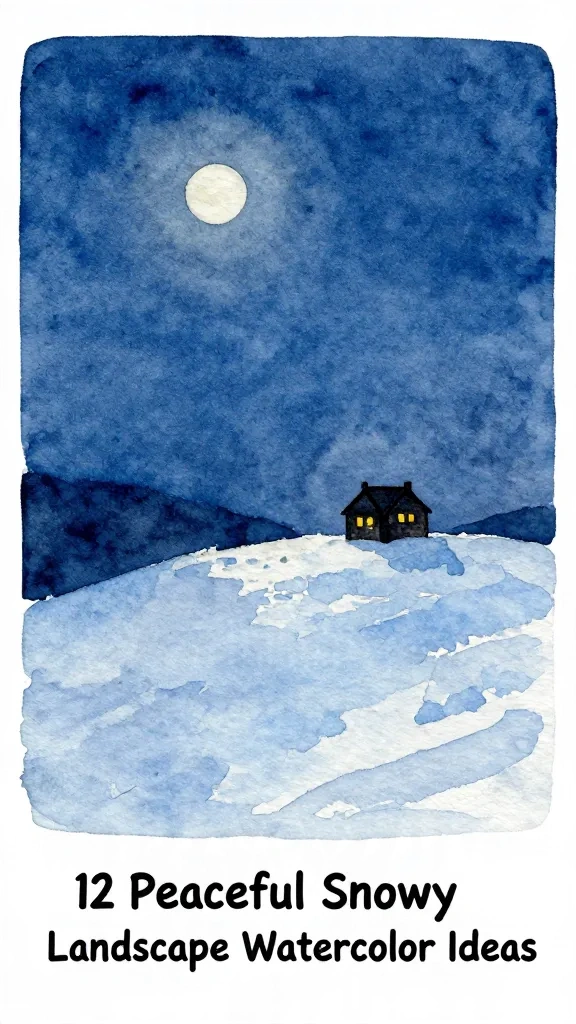
A hill with a small, warmly lit house under a moonlit sky evokes quiet wonder and serene night landscape charm.
How to Draw It
- Paint a dusky sky with a cool gradient, hinting at moonlight without overpowering the scene.
- Outline a small house with a warm glow in only a few windows to suggest life inside.
- Shape a gentle hill and keep the snow with soft, angular edges to contrast with the house glow.
- Use a pale blue wash for the snowy ground to unify the scene.
- Reserve bold darks for the house silhouette and tree lines to anchor the composition.
Minimalist details: a thin crescent moon and a couple of star-like highlights can add magic without clutter.
Closing: The moonlit setting shows how lighting can set the mood and make a simple snowy scene feel cinematic.
10. Birch Trees in a Snow Field with Soft Shadows
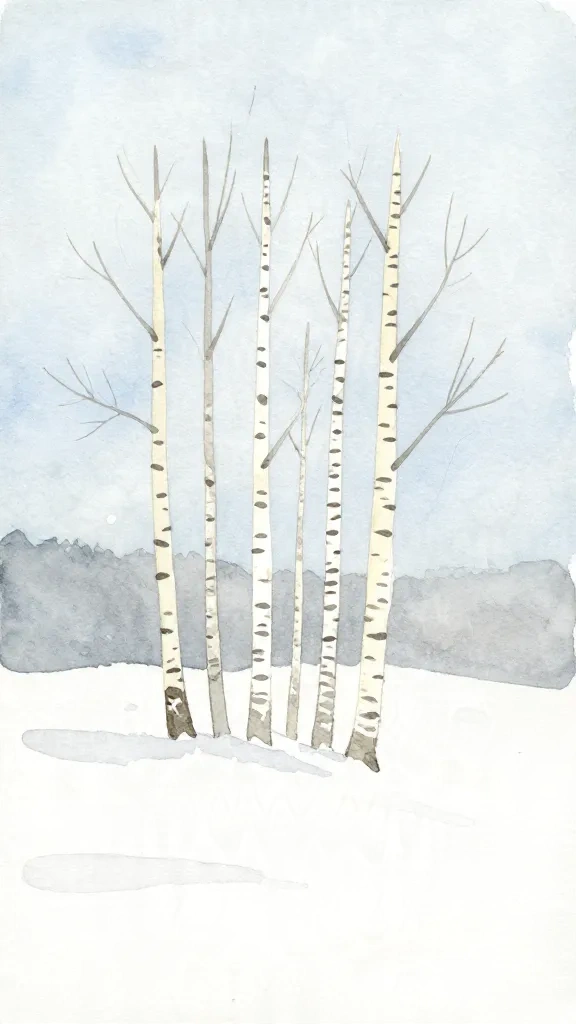
A stand of slender birch trunks against a blank snow field creates a crisp, graphic pattern that reads clearly at small sizes.
How to Draw It
- Draw several vertical birch trunks with light horizontal marks for bark texture.
- Water down a pale sky wash to keep the scene airy and calm.
- Shade the snow with a cool gray wash, letting the trunks create the contrast.
- Paint faint, soft shadows on the snow to anchor the trees.
- Keep branches sparse and simple to maintain a minimalist silhouette.
Minimalist details: a few snow clumps on the trunk shoulders and a small bird on a branch can add life.
Closing: The repeating verticals and negative space deliver a peaceful yet eye catching composition perfect for wall art pins.
11. Sled Tracks Across a Fresh Snowfield
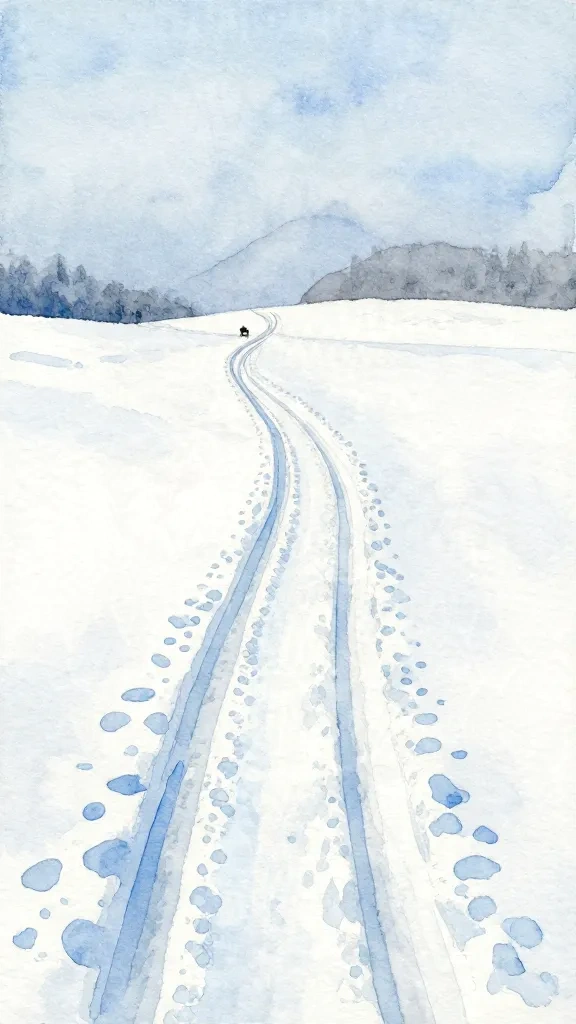
Two parallel sled tracks carve a gentle path through blank snow, inviting the viewer to imagine a playful winter moment.
How to Draw It
- Create a broad field of snow with a barely tinted cool blue wash.
- Paint two thin parallel lines that curve slightly to suggest distance and motion.
- Place a small hill or dune in the background to give depth.
- Add a tiny silhouette of a sled or person at the far end for a narrative touch.
- Keep edges soft to preserve the tranquil feel of the scene.
Minimalist details: preserve ample white space around the tracks to emphasize negative space.
Closing: This concept demonstrates how simple lines can imply motion and storytelling in a quiet winter moment.
12. Snowy Meadow with Winter Birds on Branches
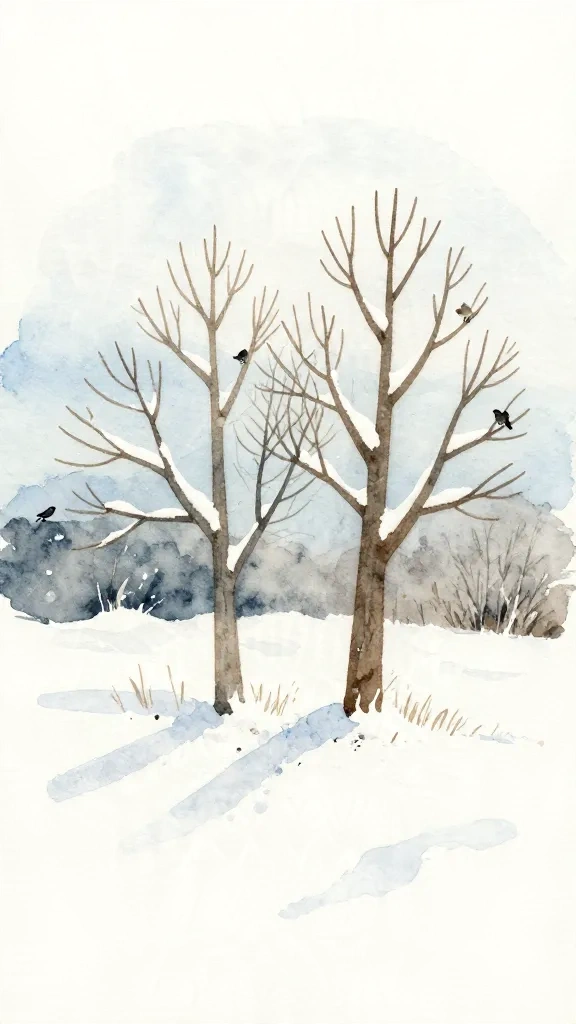
A bare landscape dotted with a few birds perched on snow covered branches makes a gentle, lively focal point.
How to Draw It
- Sketch a flat meadow with a pale blue wash for the distance and sky.
- Place a couple of bare tree silhouettes with sparse branches.
- Paint a light wash on the branches to mimic frost and snow clinging to twigs.
- Add a few tiny birds perched along the branches for a dash of life.
- Keep the color palette muted to preserve the serene feel.
Minimalist details: a single feather drift or a tiny shadow beneath a branch can subtly enrich the scene.
Closing: A small chorus of birds breaks the stillness and elevates the quiet beauty of a snowy landscape.
Tips for Making Your Drawings Look Cute and Clean
Think in simple silhouettes and gentle color shifts. A recognizable shape keeps each idea readable at a glance on social media.
Leave plenty of white space around subjects so each piece can breathe and look ready for pins or print.
Quick Drawing Tips
- Use basic shapes to map each scene before painting.
- Maintain consistent line weight to unify the collection.
- Limit the palette to cool blues, grays, and a touch of warm highlight for windows or sun.
- Experiment with soft washes to create atmospheric distance.
- Keep the focal area clean and crisp while letting the rest recede softly.
These practices help you turn simple subjects into graceful watercolor pieces that feel cohesive and shareable.
You May Also Like:
10 Magical Watercolor Snow Globe Painting Ideas
12 Cute Watercolor Snowman Painting Ideas to Try
12 Cute Watercolor Santa Claus Painting Ideas
Frequently Asked Questions About 12 Peaceful Snowy Landscape Watercolor Ideas
What supplies are ideal for these peaceful snowy landscape ideas?
A basic watercolor set, a few brushes of varying sizes, watercolor paper, and a pencil for sketching are enough to start. A white gel pen can add snowy highlights sparingly.
Which ideas are best for beginners who want a quick win?
Ideas like Silent Pine Forest, Snow Covered Field with a Path, and Fence Posts in Snow are great for beginners because they rely on simple shapes and clean silhouettes.
How can I keep my snowy landscapes looking cohesive as a series?
Use a restrained color palette, repeat key shapes like trees and fences, and maintain consistent spacing and horizon lines across all pieces.
What is a simple way to add depth without clutter?
Layer pale washes for the background, midtones for midground, and keep foreground elements darker and crisper. Let negative space do the heavy lifting.
Can these ideas be adapted for journaling or stickers?
Yes. Traceable outlines with bold silhouettes work well for stickers, and these simple compositions fit nicely into small journal pages or planner spreads.
How do I choose which idea to start with?
Pick a scene that matches your current mood or the colors you have on hand. Starting with a simple silhouette helps you gain confidence quickly.
Pick Your Favorite and Start Drawing
You do not need perfect lines to create charming snowy landscapes. Focus on the basic shapes, keep the details simple, and let each subject have its own personality.
Choose a favorite idea and give it a try in your sketchbook. Save this collection for your next drawing session and adapt the designs to suit your own style.
Conclusion
Begin with one peaceful snowy landscape watercolor idea and let it guide your practice. You will gradually build a cohesive, pin worthy collection that feels calm and rewarding.
Remember that small imperfections can add character and charm. Share your favorite page with a friend who loves winter scenes and enjoy the process together.

Hi, I’m Abdul Moeed Shahid, the creator of Sketch and Fun. I’m passionate about helping people of all ages explore their creativity through fun drawing ideas and printable coloring pages. My goal is to make art simple, accessible, and enjoyable for everyone!