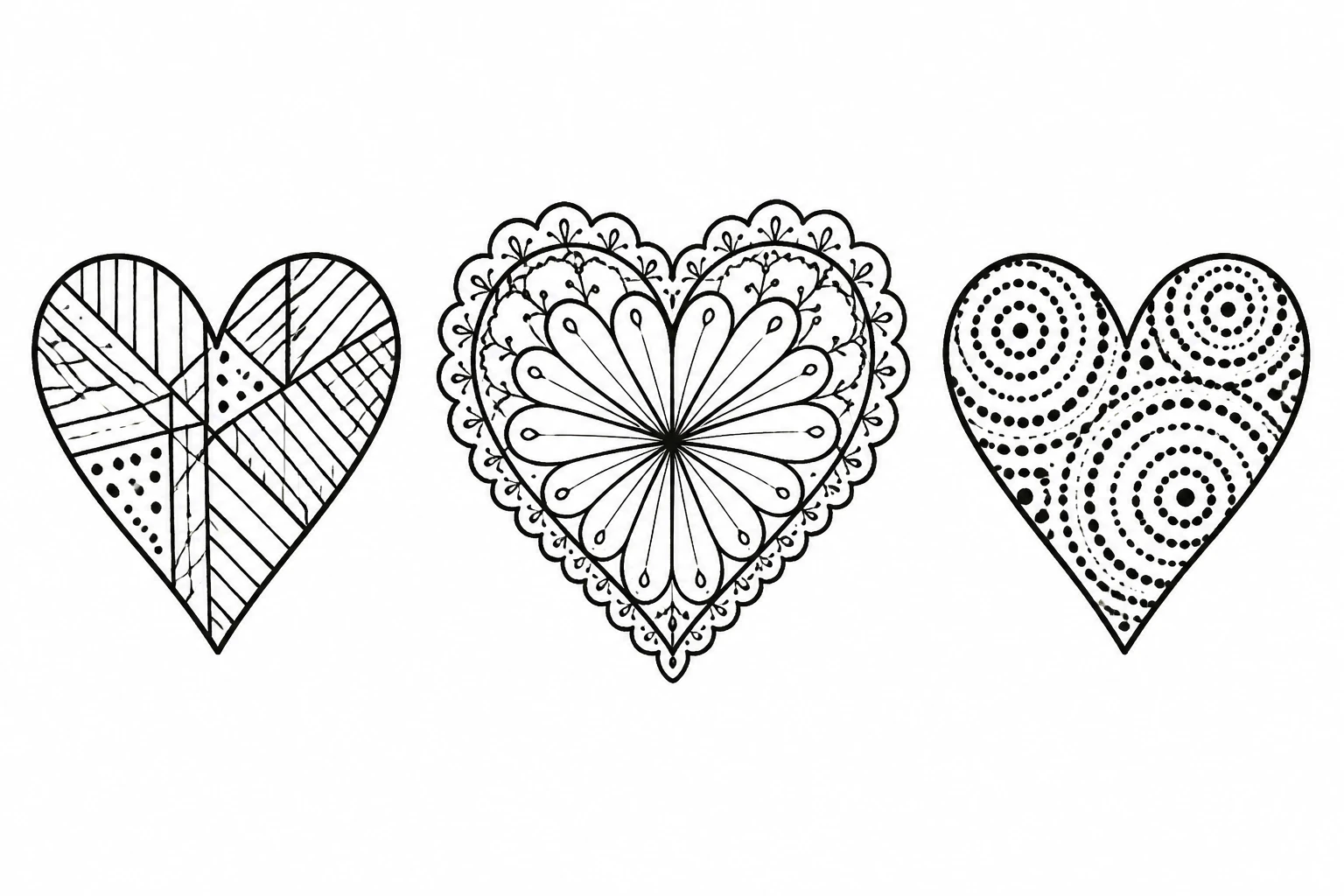
Ever looked at a tiny heart and thought it could be a whole tiny universe of patterns?
Zentangle hearts are the perfect playground for doodlers who want to keep things simple yet striking.
With clean lines and a focus on rhythm, these designs invite you to layer texture without cluttering the silhouette.
Minimal details let you build a cohesive page that feels both calm and dynamic, ideal for Pinterest pins and quick sketchbook practice.
Whether you are into mindful doodling or decorative journaling, these ideas provide reliable, repeatable steps that still feel fresh each time you draw.
1. Delicate Lace Heart With Petal Pleats
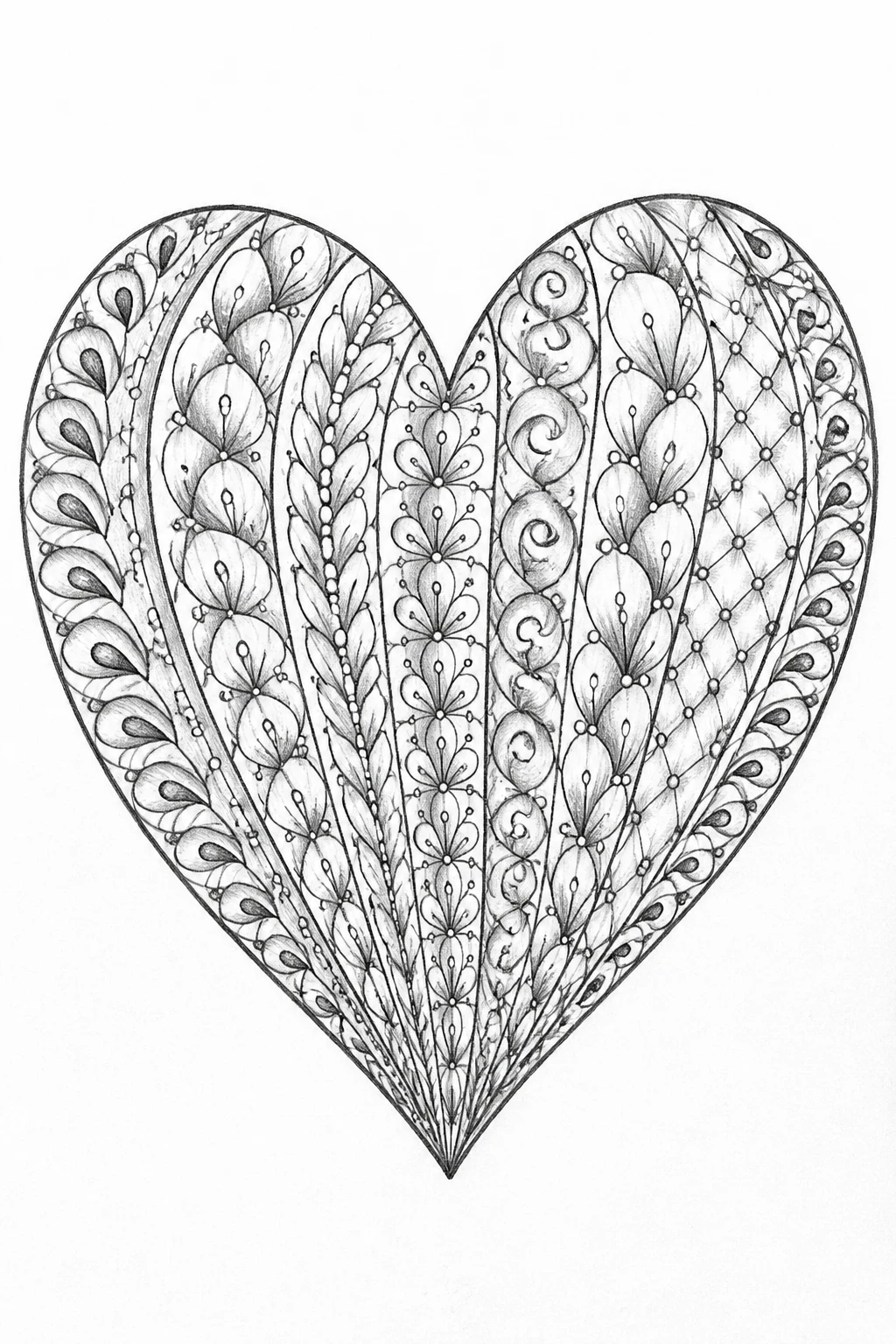
This heart blends soft curves with a lace inspired texture that reads as delicate and decorative. The petal pleats create a rhythm inside the silhouette, giving a hand-stitched vibe without any actual stitching required. It feels elegant yet approachable for beginners.
How to Draw It
- Draw a classic heart outline with a smooth, even curve.
- Divide the interior into vertical zones using light guideline lines that follow the heart contour.
- Within each zone, sketch a repeating petal or teardrop motif that curves with the heart edge.
- Finish with a slim border and a few tiny dots along the outer line to mimic delicate lace edging.
Keep patterns tight and evenly spaced to maintain that refined lace look. The simplicity of one repeated motif across zones helps the design stay minimal yet richly textured.
2. Monoline Stitched Heart in Zentangle Style

Imitate a stitched look inside a bold heart by using a single line that winds to form stitches. This concept is striking in its clean silhouette and graphic contrast. It’s perfect for quick practice that still feels modern and bold.
How to Draw It
- Draw a smooth heart outline.
- From the top edge, begin a continuous line that dips inward to simulate a seam, then returns to the outline to continue stitching in a back and forth pattern.
- Alternate short straight segments with tiny gaps to resemble stitches, keeping a consistent gap size.
- Add a thin outer stroke to anchor the stitches against the heart interior.
One line creates the whole concept, so focus on even spacing and a steady pace. The stitched look adds texture without complicating the form.
3. Heart Mandala Core: Radiant Radial Patterns
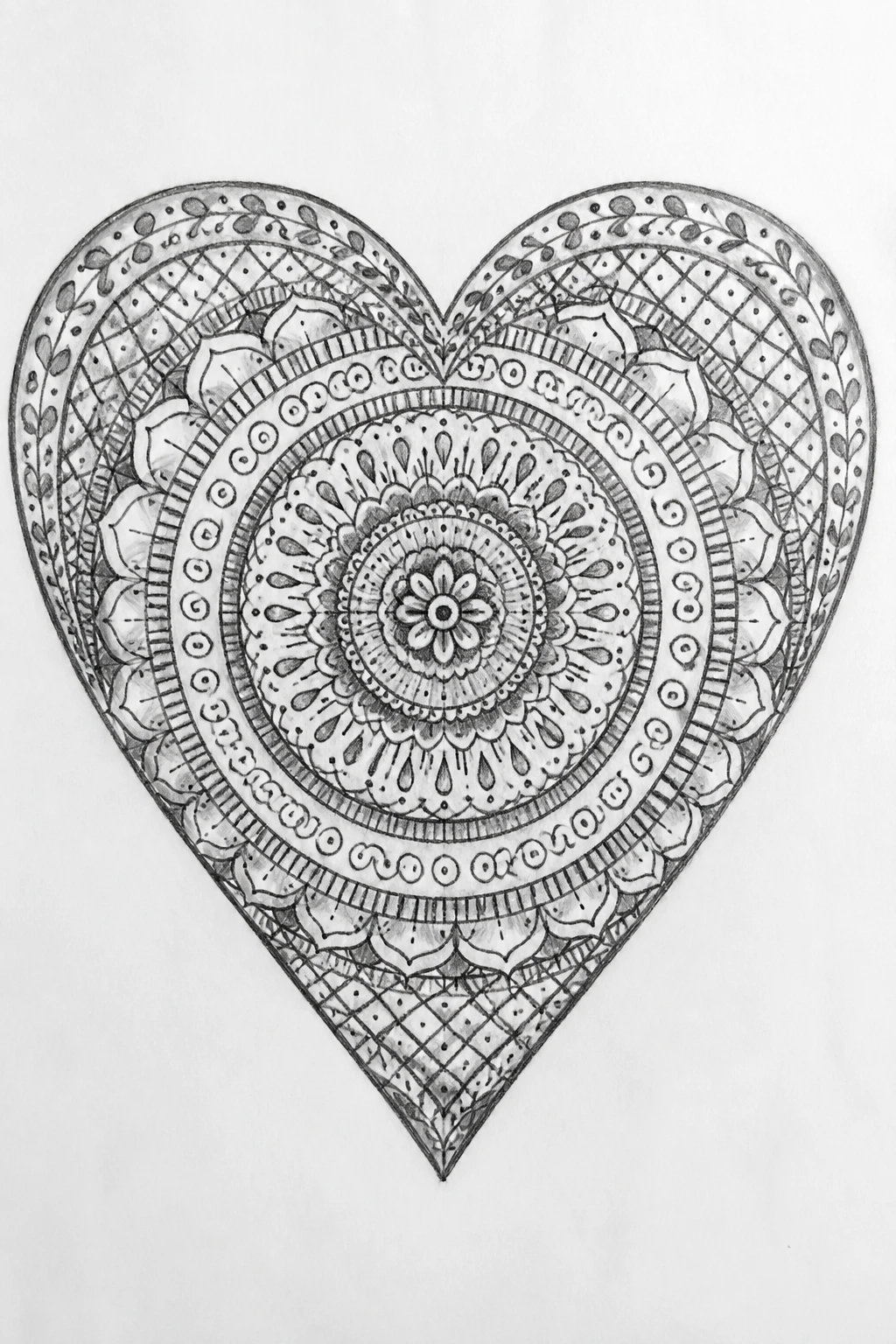
A heart that houses a tiny mandala at its center combines central symmetry with a heart shape. The radial play around a compact core makes it pop as a pin or sticker design while staying minimalist.
How to Draw It
- Start with a small heart in the center as the mandala seed.
- From the center, sketch concentric rings of basic patterns like dots, short lines, and tiny teardrops that radiate outward toward the heart edges.
- Leave generous negative space between rings to preserve clarity.
- End with a solid outer heart outline to frame the mandala.
Tip: keep each ring evenly spaced to maintain a calm, hypnotic rhythm. A minimalist approach to mandala motifs prevents the design from becoming busy while still feeling intricate.
4. Leafy Heart Grid: Linear Nature Pattern
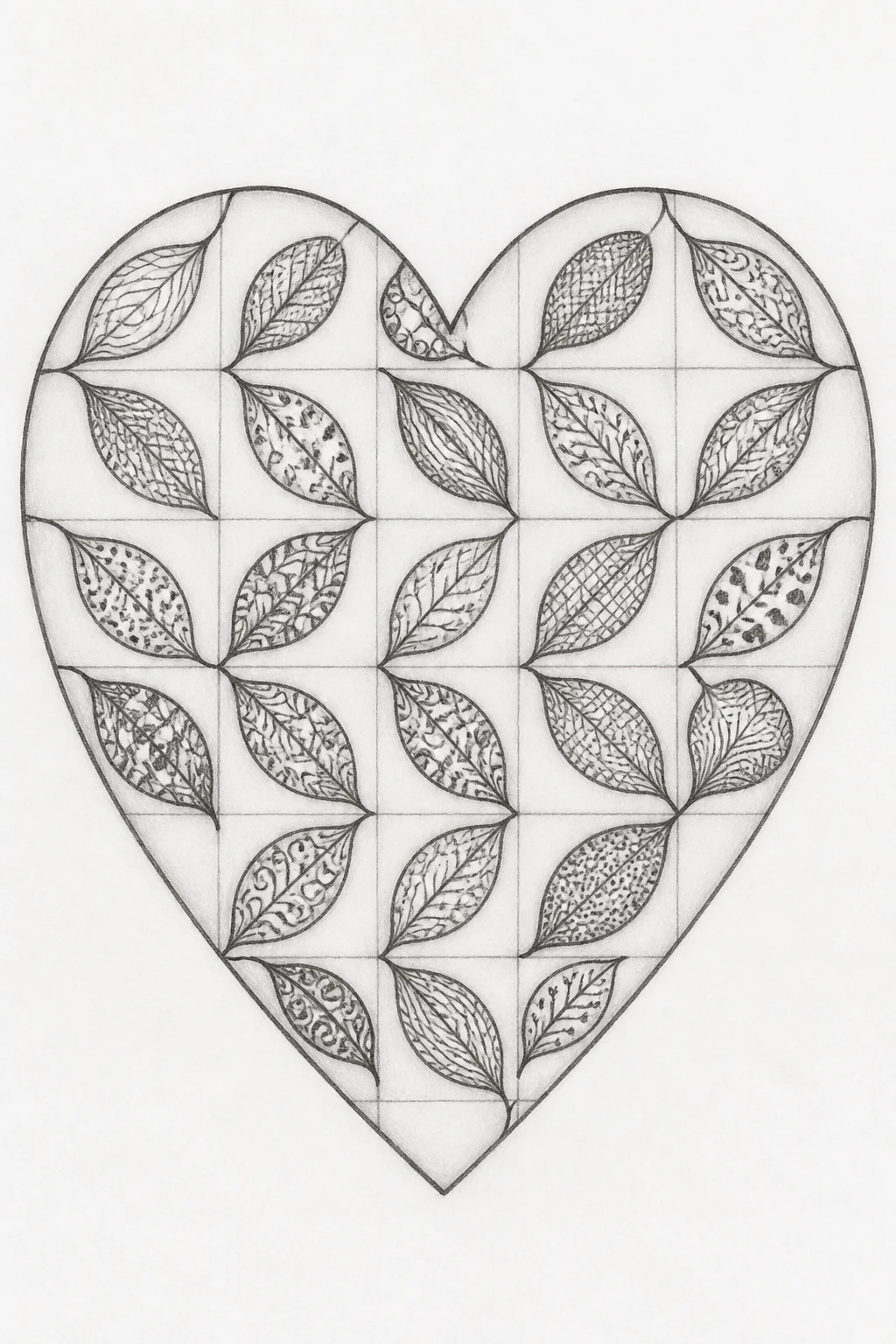
This concept uses a grid of simple leaf shapes arranged inside the heart. The botanical vibe is calming and universal, making it ideal for nature lovers who want a tidy composition with gentle texture.
How to Draw It
- Sketch a classic heart, then lightly divide the interior into a 4×4 or 5×5 grid depending on heart size.
- In each cell, draw a tiny leaf or teardrop with a minimal stem running along a grid line.
- Alternate leaf angles so the grid feels lively rather than perfectly flat.
- Outline the heart with a bold line to unify the grid and enhance readability.
The key is even distribution. One cell may be blank or hold a tiny seed dot to keep the pattern breathable and not overwhelming.
5. Echo Lines Heart: Curved Contour Repetition

Echo lines compress motion into a compact silhouette. This design uses parallel curved lines that follow the heart’s contour, creating a soft wave that reads as texture rather than clutter.
How to Draw It
- Draw a clean heart outline.
- Inside the heart, draw several parallel curved lines that run from the top lobes toward the tip, closely following the outer curve.
- Vary the spacing slightly to create a subtle rhythm while keeping the lines thin and even.
- Finish with a minimal border focus and optionally a tiny central dot for balance.
Minimalism shines here when the lines become the subject. This idea translates well to black ink on white paper or as a single color on colored stock.
6. Lattice Heart Mesh: Minimal Geometric Intersections

Geometric lattices inside a heart create a modern, almost architectural feel. A few intersecting lines can form a robust mesh that remains surprisingly airy and elegant.
How to Draw It
- Outline the heart with a bold stroke.
- Lightly draw a vertical line down the center and a horizontal line across the widest part to establish a grid.
- Within each grid cell, add simple tiny shapes like dots, short dashes, or mini diamonds, stopping short of the border to keep a clean look.
- Erase guide lines if needed and reinforce the outer edge with a crisp line.
Keep the mesh tight but with occasional open spaces to avoid a crowded appearance. The lattice effect works nicely for those who love precise, graphic doodles.
7. Dot Heart Contour With Subtle Shifts
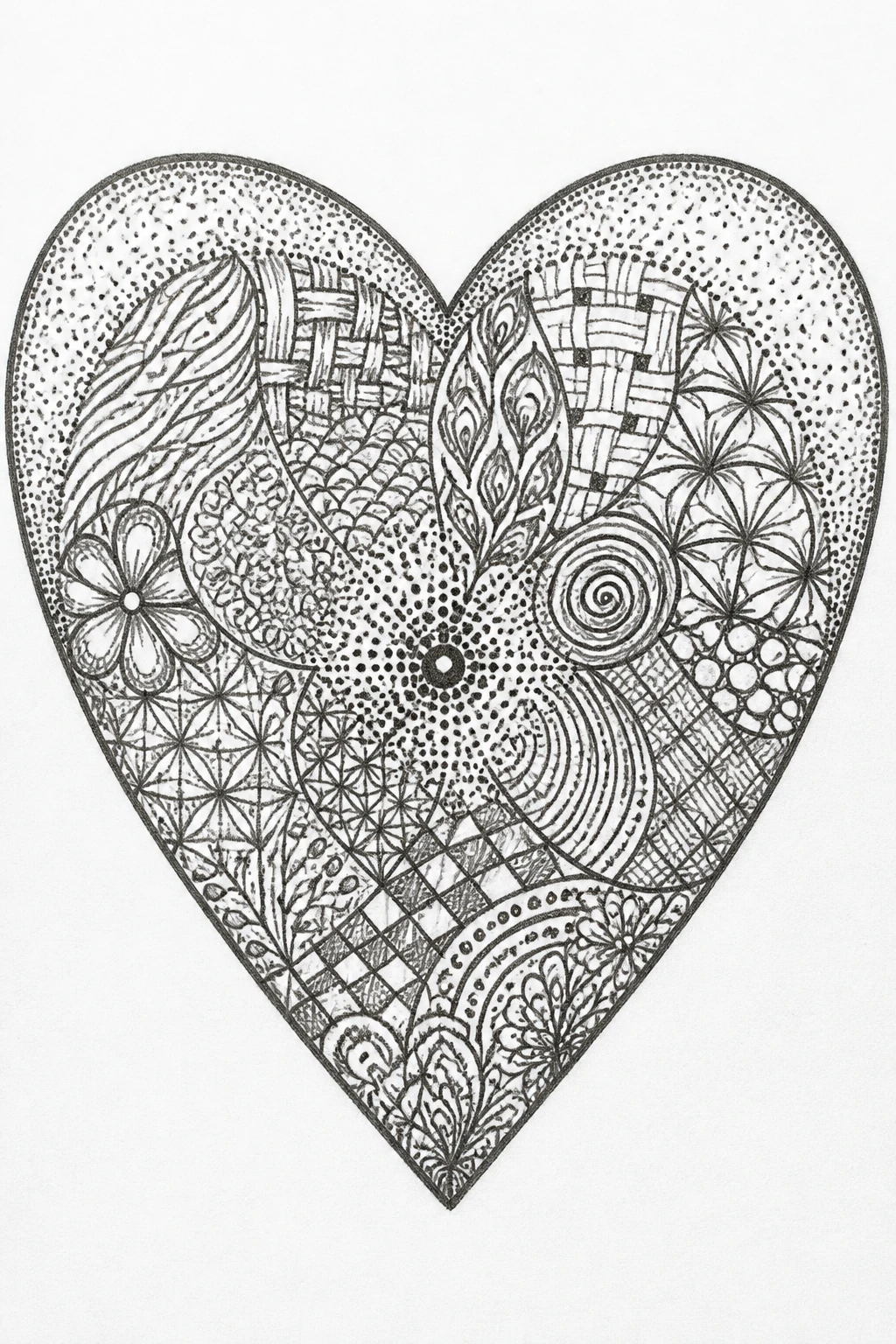
Dots create a gentle texture that feels playful yet refined when confined to a heart shape. A subtle graduation of dot density can convey depth without any shading or complex techniques.
How to Draw It
- Draw your heart outline as the boundary for dot work.
- Place evenly spaced small dots along the inner edge, increasing density toward the center and lightening toward the outer edge for a soft vignette effect.
- Use a few larger dot clusters near the heart’s center to draw the eye inward.
Ballooning dot density gives a tactile feel without breaking the minimalist principle. This idea is excellent for beginner doodlers who want a tangible texture without line fatigue.
8. Heart Flower Silhouette: Tiny Petal Implosion
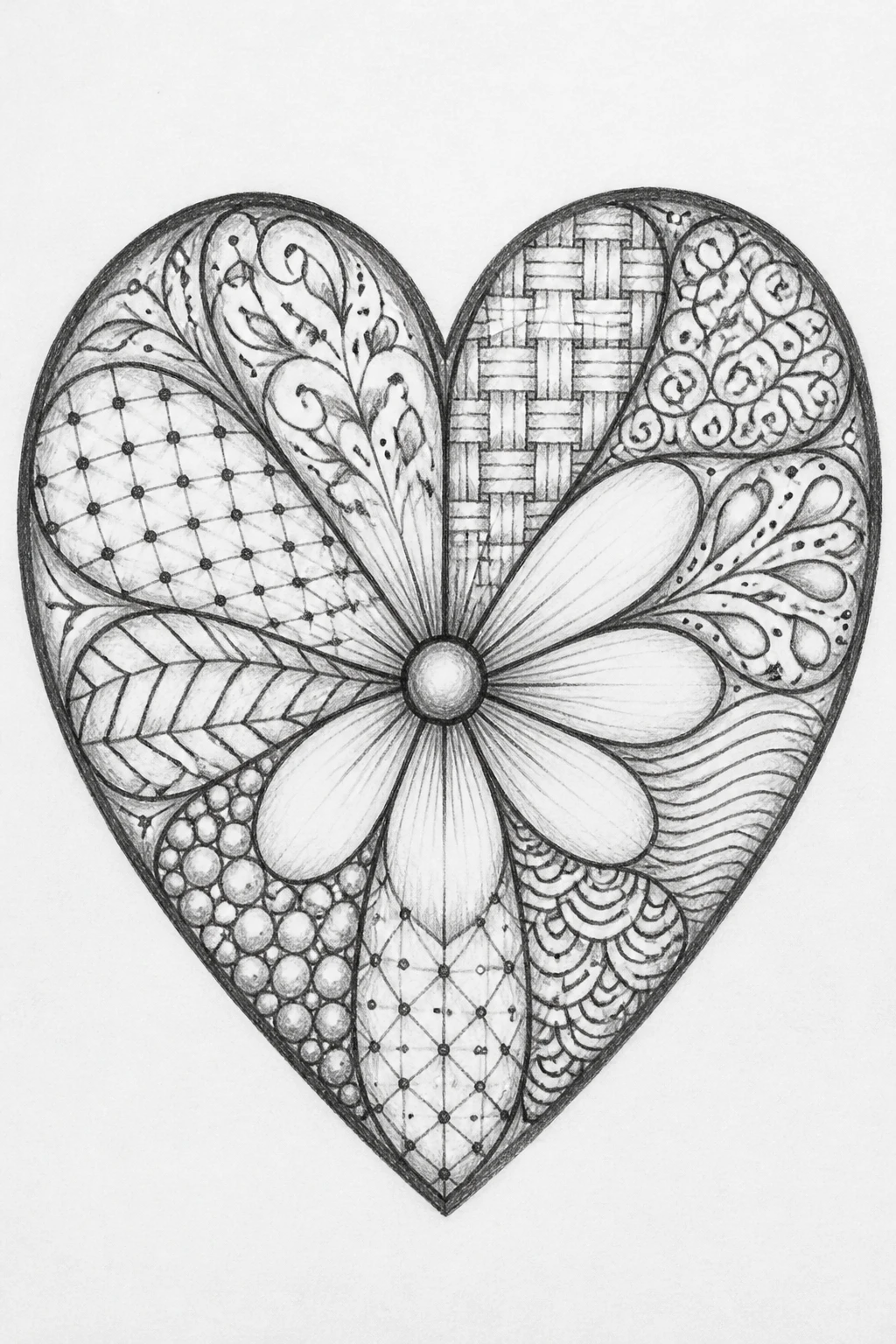
Imagine a tiny flower blooming inside the heart from the center outward. The petals radiate with simple curves, creating a charming bloom that feels celebratory yet simple.
How to Draw It
- Outline the heart lightly and sketch a small circle at the center as the blossom core.
- Draw several teardrop petals that fan outward from the center, following the heart’s curvature.
- Add a few short, straight lines at the petal bases to suggest subtle veining.
- Darken the outer heart line to anchor the composition.
Keep petals uniform in size for harmony. The result is instantly recognizable and lends itself to coloring pages or sticker designs.
9. Crescent Moon Heart: Night Sky Within
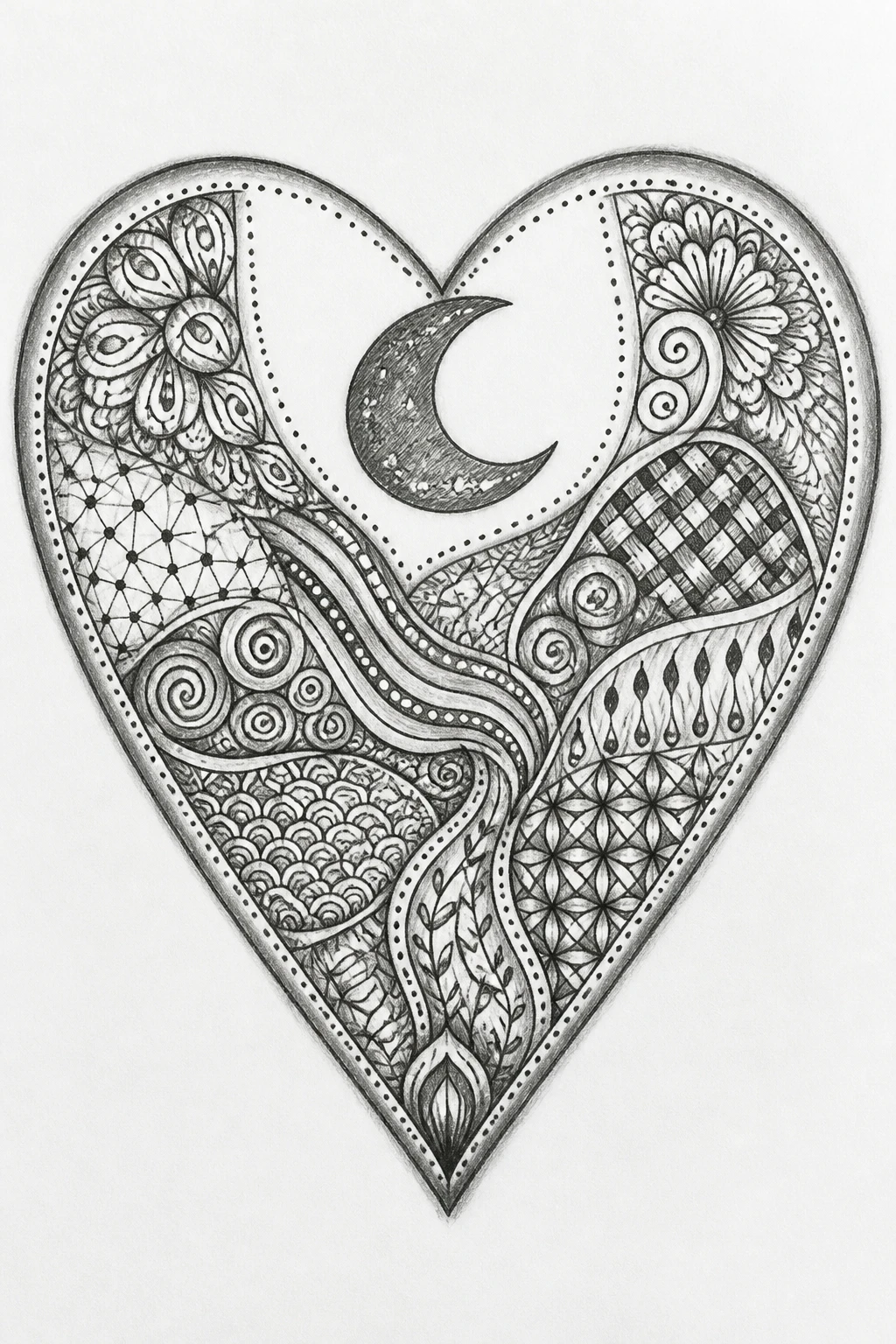
Incorporate a crescent moon motif inside the heart to evoke calm evenings and dreamy vibes. The negative space between the moon and the heart border becomes a thoughtful contrast that remains minimal.
How to Draw It
- Draw the heart outline and then place a small crescent moon near the top center inside the heart.
- Fill the moon with simple diagonal hatch marks or tiny stars to suggest a night sky.
- Add a thin ring of dots along the inner heart boundary to soften the transition between shapes.
The moon motif adds a serene narrative to the heart while keeping the overall design uncluttered and highly pin-friendly.
10. Hatching Heart Shell: Layered Lines with Breathable Space
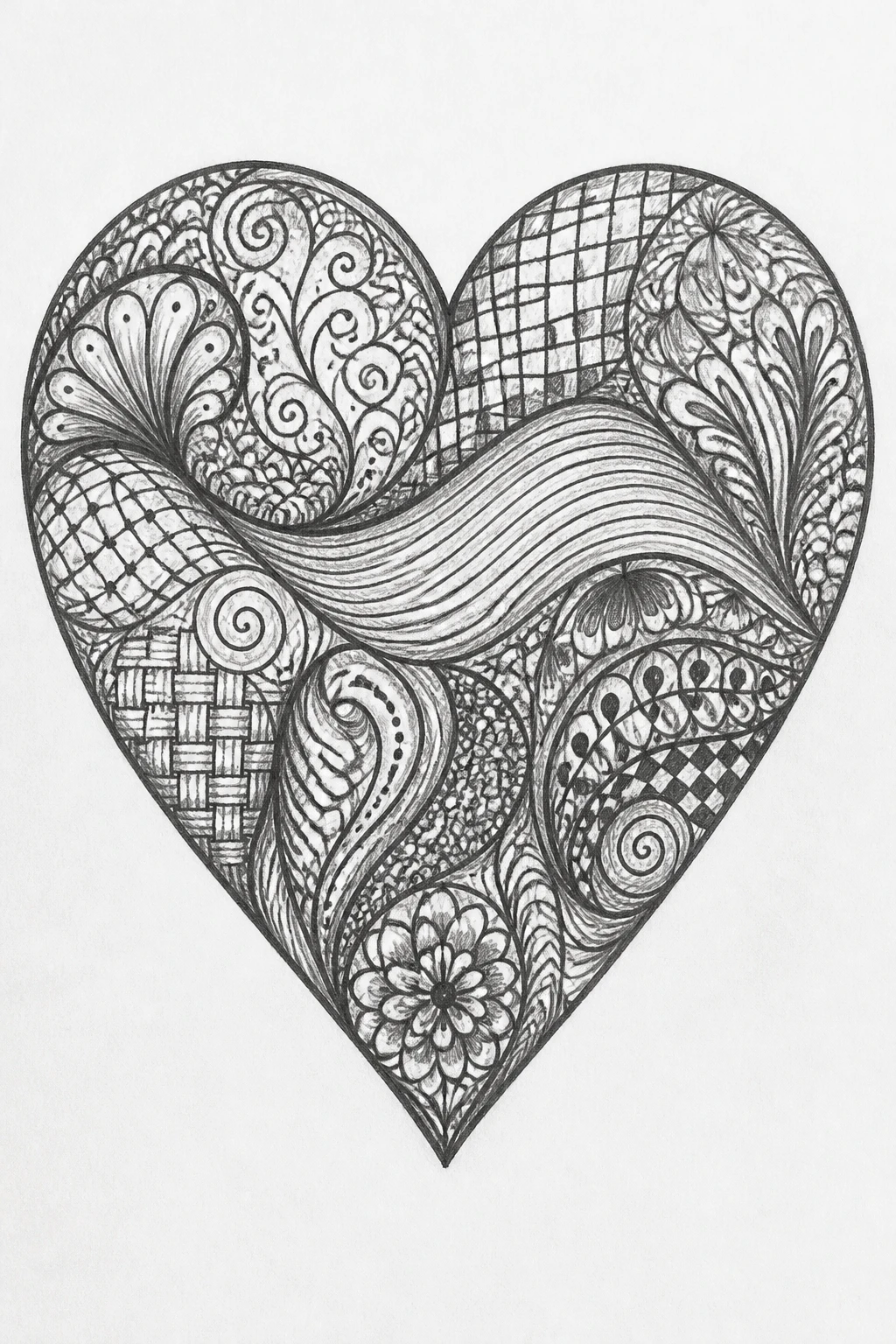
Hatching inside the heart creates depth through linear shading, but kept light and open. This design balances texture with clarity, making it ideal for quick practice and clean results.
How to Draw It
- Draft a smooth heart outline.
- Inside, lay a handful of parallel hatch lines that curve gently to follow the heart’s contour.
- Alternate line directions in a few zones to add subtle variation and avoid a flat look.
- Emphasize the outer edge with a slightly thicker line to preserve the silhouette at smaller sizes.
Hatching keeps the drawing tactile while staying faithful to the minimalist constraint. It also scales well for stamps and digital icons.
11. Tiny Heart Porthole: Circular Windows Within

This idea packs the heart with tiny circular portholes or windows that reveal micro patterns inside each circle. It creates a playful, almost comic look while staying tied to the heart shape.
How to Draw It
- Draw the heart outline and then add a few evenly spaced small circles inside the body.
- Within each circle, sketch a tiny, simple motif such as a dot, a small star, or a curved line that resembles a mini Zentangle tile.
- Keep the tile shapes and motifs consistent to maintain cohesion across the windows.
Limit the number of portholes to prevent overcrowding. The windows invite a playful, pin-worthy aesthetic that remains beneath the complexity threshold for beginners.
12. Snug Ribbon Heart: Weave Pattern Along a Ribbon Outline

Wrap a tiny ribbon around the heart’s edge with a simple weave pattern. This idea adds a sense of movement and a touch of elegance, while the ribbon keeps the composition tidy and readable.
How to Draw It
- Draw a heart and imagine a ribbon that follows the outer contour from top left to bottom right.
- Inside the ribbon, create a repeating weave using short diagonal lines alternating over and under each pass.
- Finish with a solid edge for the heart and a few tiny highlights along the ribbon to imply shine.
The ribbon weave introduces a delicate contrast between the bold heart silhouette and the fine internal texture. It makes a sophisticated pin while staying approachable for new doodlers.
You May Also Like:
13 Zentangle Shapes and Patterns to Use in Your Doodles
10 Zentangle Border Ideas for Journals and Sketchbooks
14 Zentangle Mandala Ideas for Peaceful Doodling
Tips for Making Your Drawings Look Cute and Clean
Great Zentangle heart doodles start with a strong silhouette and clear interior rhythm. Keep the heart outline bold and consistent so each design remains instantly readable, even when scaled down for Pinterest thumbnails. A calm interior pattern looks intentional rather than crowded, so plan your motifs to leave open space where necessary.
Think in terms of balance and rhythm across the interior. Alternate motifs or directions to avoid a zigzag that feels busy. If a section feels heavy, reduce the density there and let another area carry the visual weight. This approach helps your whole page feel cohesive rather than a collection of random marks.
When working digitally or for printable sheets, test your designs at smaller sizes. A strong, simple silhouette with high contrast translates best on pins and stickers. If you color, choose a palette that keeps lines crisp and the negative space breathing. Monochrome and two tone schemes often perform best for quick shares and clean lines.
Practical Tips
- Use a light pencil to sketch guide lines, then go over with a darker pen for a crisp final look.
- Keep line weight consistent within each design to preserve a cohesive hand drawn feel.
- Leave generous white space around each heart if compiling multiple ideas on a single page for Pinterest pins.
- Experiment with rotating the heart or flipping the pattern to see how the composition changes visually.
- Save a version with only outlines and another with filled Zentangle motifs for flexibility in coloring pages or sticker sheets.
- For beginners, practice each motif separately before placing it inside the heart to build confidence and precision.
How to Make Simple Drawings Stand Out
Focus on the heart as the main shape and treat interior patterns as textures rather than clutter. High contrast between the outer silhouette and interior fills grabs attention quickly, especially on mobile feeds. A clean, bold outline helps every design read clearly, even when small.
Keep the set of 12 ideas visually cohesive by using a handful of shared motifs or shapes, while ensuring each idea still reads as its own concept. That balance makes the collection easy to view as a cohesive Pinterest board or a printable mini collection.
Remember that simplicity is a feature, not a limitation. Every idea should feel intentional and ready to pin, sketch in a journal, or be used as a decorative element for planners and stickers.
Pick Your Favorite and Start Drawing
You do not need perfect lines to create charming Zentangle heart doodles. Focus on the basic silhouette, maintain clean interior rhythm, and let each heart carry its own distinctive texture and mood. Start with whichever idea resonates most and give it a go in your sketchbook or on a fresh sheet of paper.
Save this collection for later inspiration and feel free to adapt the designs to your own style, color preferences, or paper size. Small changes can reveal a new personality for your Zentangle heart, while the core idea stays instantly recognizable to viewers who adore simple decorative doodles.

Hi, I’m Abdul Moeed Shahid, the creator of Sketch and Fun. I’m passionate about helping people of all ages explore their creativity through fun drawing ideas and printable coloring pages. My goal is to make art simple, accessible, and enjoyable for everyone!