Ever stared at a blank page and felt your mind wander into tiny squiggles and loops?
Zentangle inspired sketches can turn that blank space into a calm, creative workout for your hand and imagination.
These ideas are simple enough for a quick practice session, yet charming enough to keep you engaged as you build a tiny mini photo-worthy portfolio on your sketchbook pages.
Ready to dive into a set of unique, minimalistic designs?
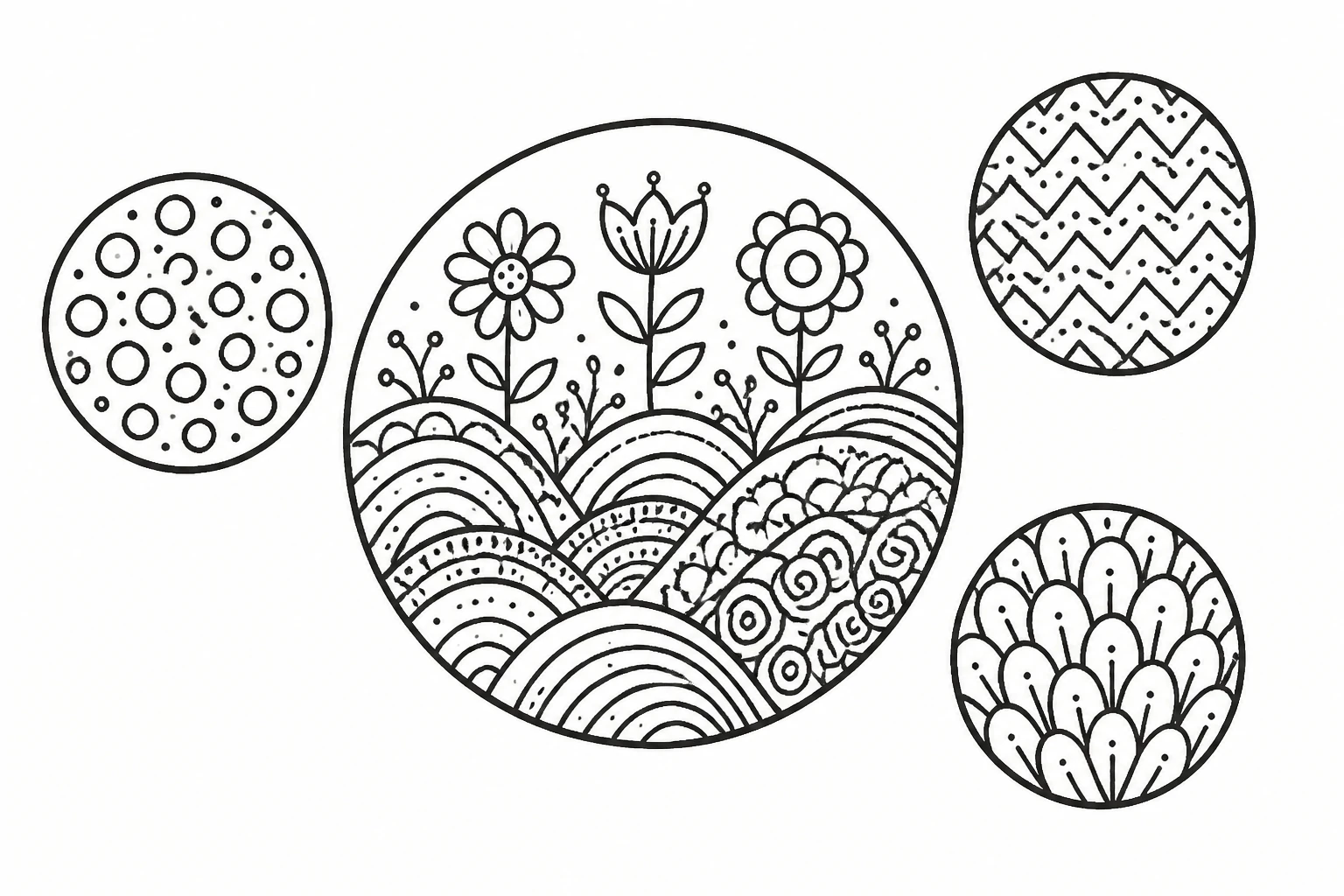
1. Tiny Wave Garden Within a Circle

The concept centers on a circle filled with a garden of tiny wave like shapes and micro patterns. The circular boundary helps create a satisfying, self contained composition that reads as a complete Zentangle study at a glance. It is visually restful yet intriguing because of the density of the patterns inside the circle.
How to Draw It
- Draw a neat circle as the boundary.
- Divide the circle with light guidelines into three or four radial sections.
- Fill each section with a different repetitive pattern such as parallel waves, tiny scallops, and dotted lines.
- Add a bold outer ring to emphasize the circle and keep the interior patterns contained.
Keep the inner lines crisp and even so the patterns read clearly. The strongest feature is the radial symmetry combined with micro patterns that invite close inspection on a small screen or in a tiny sketchbook square.
2. A Minimalist Lantern of Tangled Strands

A simple lantern shape becomes a fascinating Zentangle subject when you fill the lantern’s body with interwoven patterns. The silhouette is instantly recognizable, while the tangled fills create a rich texture that looks good in very small or very large formats.
How to Draw It
- Sketch a simple lantern shape with a rounded top and a straight rectangular body.
- Divide the lantern face into equal panels using light vertical lines.
- In each panel, draw a distinct tangling motif such as lattice, cross hatching, or looping vines.
- Outline the lantern with a clean bold stroke to anchor the page.
One key detail to keep it minimal is to limit the number of different patterns per lantern to three or four. The contrast between the crisp outline and intricate fills makes this idea pop on social feeds and in coloring books alike.
3. Abstract Feather of Repeated Arcs
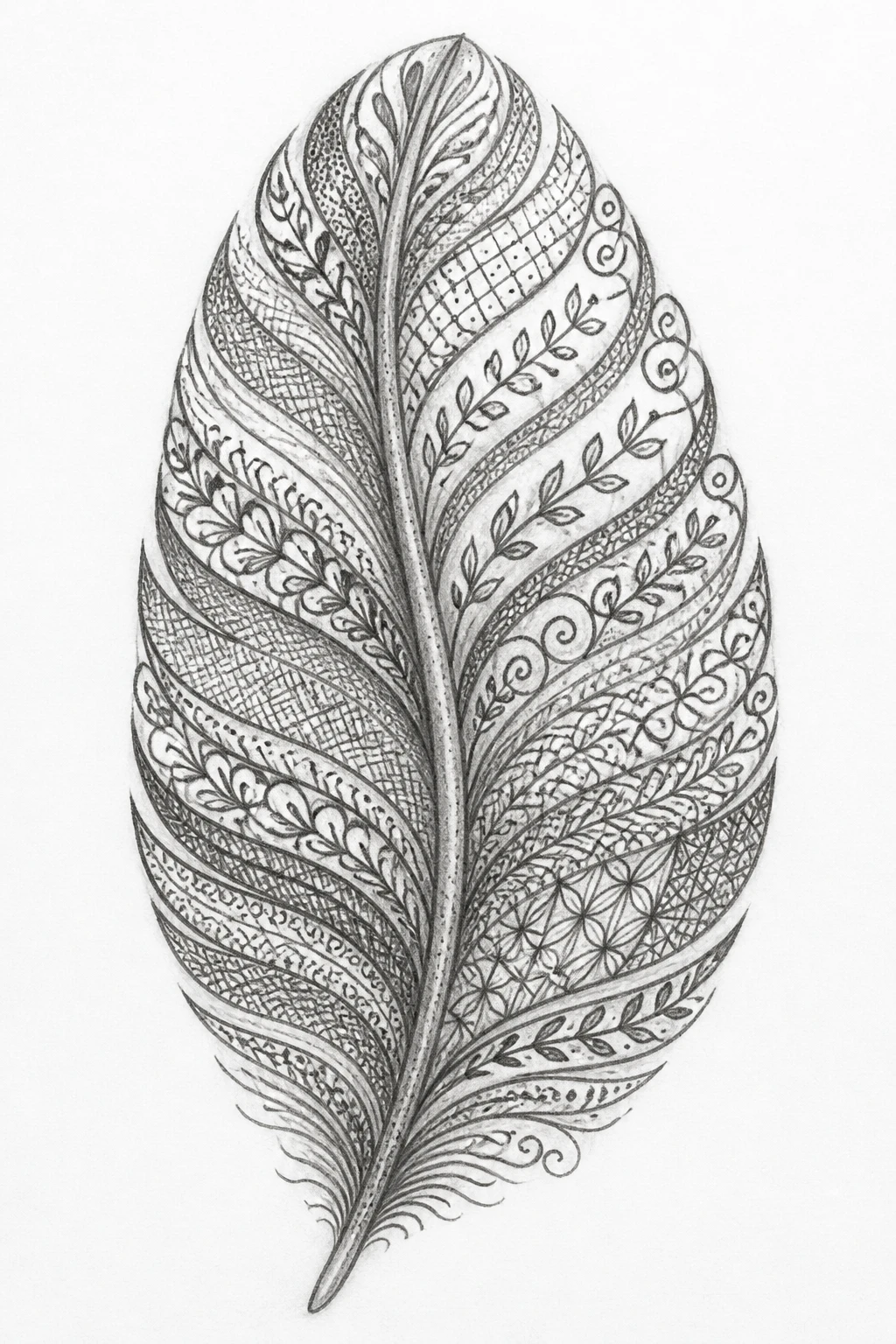
Feathers naturally translate into Zentangle friendly geometry because their curved lines invite repetition and rhythm. This minimalist feather uses a single central spine and curling arcs that radiate outward in a tidy, feather inspired silhouette.
How to Draw It
- Draw a slim vertical spine with a slight curve.
- From the spine, draw several evenly spaced curved lines on each side to form the feather vanes.
- Fill sections between the vanes with tiny patterns like stippling, tiny waves, or stippled dots.
- Finish with a light shadow under the feather tip to give it a little lift on the page.
Two small details can lift the vibe: a subtle hollow outline along the spine and a tiny stem of leaves at the bottom. The resulting shape remains instantly identifiable and naturally shareable on pins and boards.
4. Crescent Moon Assemblage in Grid Layout
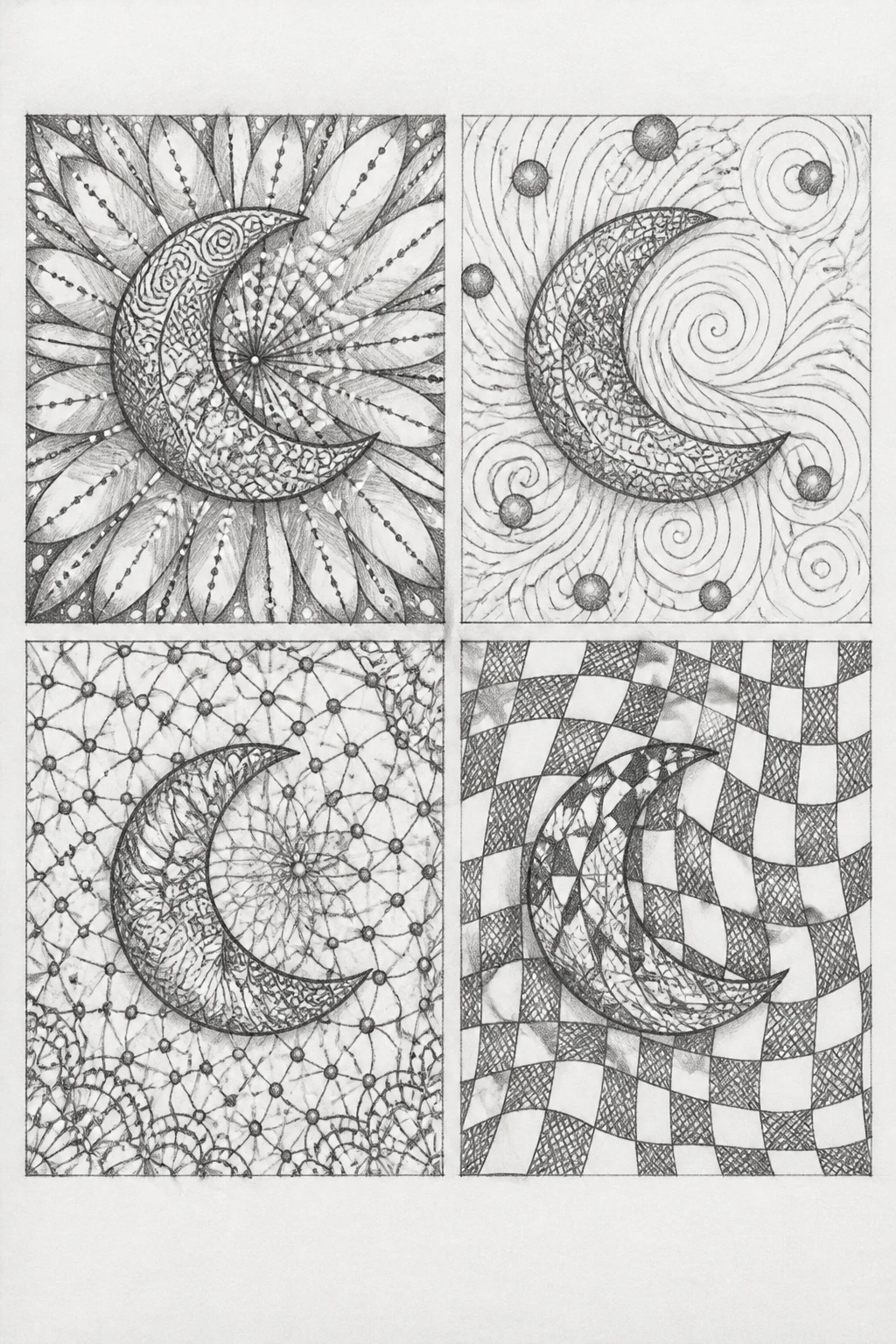
This idea places a crescent moon into a grid so each square becomes a tiny stage for a different texture or pattern. The grid helps keep the composition orderly while the moon brings a gentle, recognizable focal point that anchors the eye.
How to Draw It
- Draft a light grid with two rows and two or three columns depending on your page size.
- Place a small crescent in each grid cell, varying its orientation slightly.
- In each cell, fill with a unique tangling pattern such as spirals, checkerboard lines, or floral motifs.
- Use a bold outer frame to unify the grid across the page.
The charm lies in the subtle variations of patterns paired with a simple shape. It reads as a cohesive series while still offering ten distinct micro designs to explore and pin.
5. Silhouette Forest of Dainty Pines
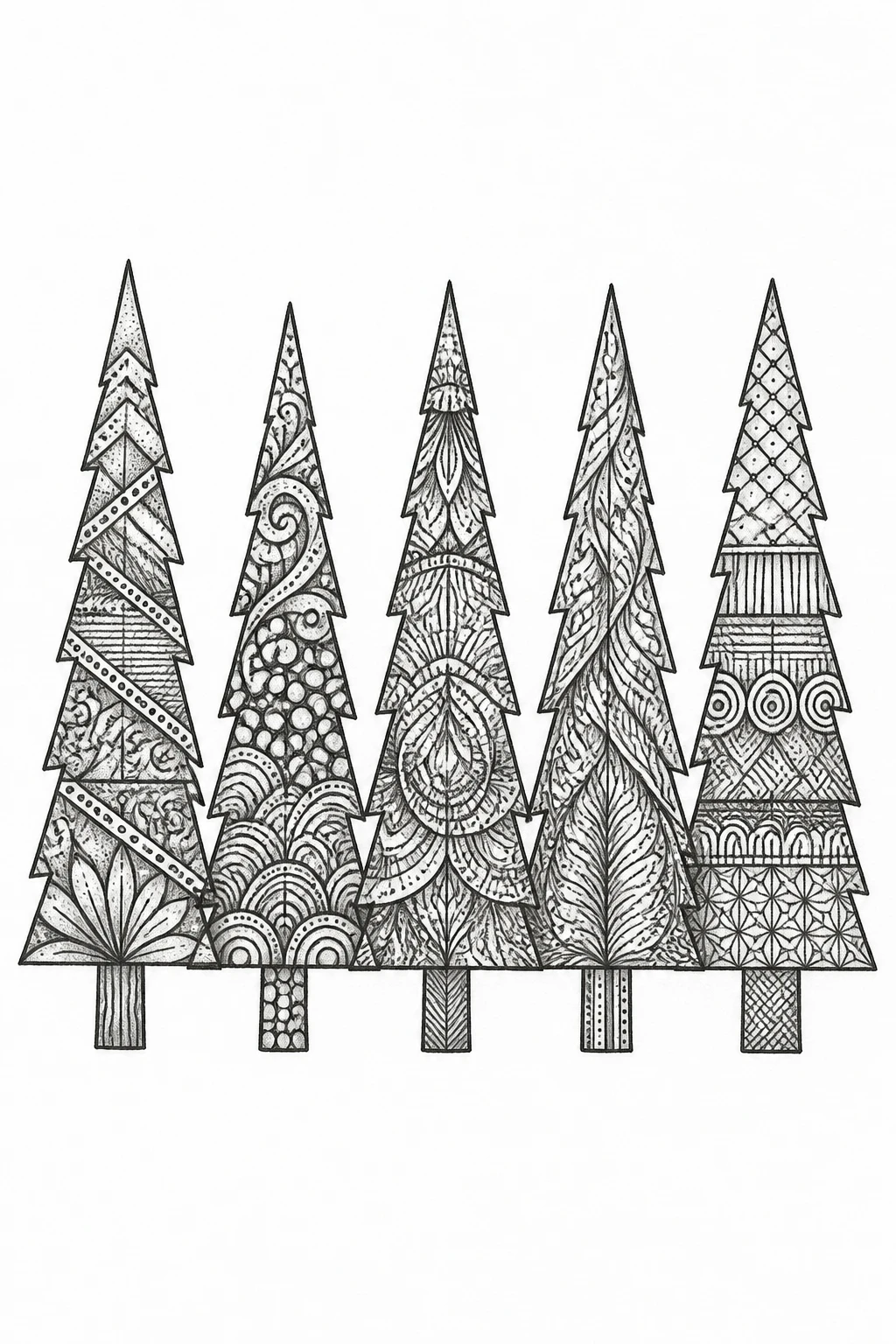
Turn a tiny forest silhouette into a Zentangle playground by treating each tree as a canvas for a different interior pattern. The clean line of the trees contrasts with the interior complexity, yielding a calm, graphic look ideal for a minimalist mood board.
How to Draw It
- Draw a simple row of pine tree silhouettes with clean triangular shapes.
- Inside each tree, carve a different pattern such as zigzags, spirals, or dot clusters while preserving the tree outline.
- Space trees evenly and add a small ground line to anchor the scene.
Limit the interior patterns to keep the overall look cohesive. The solid profile of the trees makes this idea a strong visual for Pinterest boards and journal pages alike.
6. Petal Swirl Mandala Slice
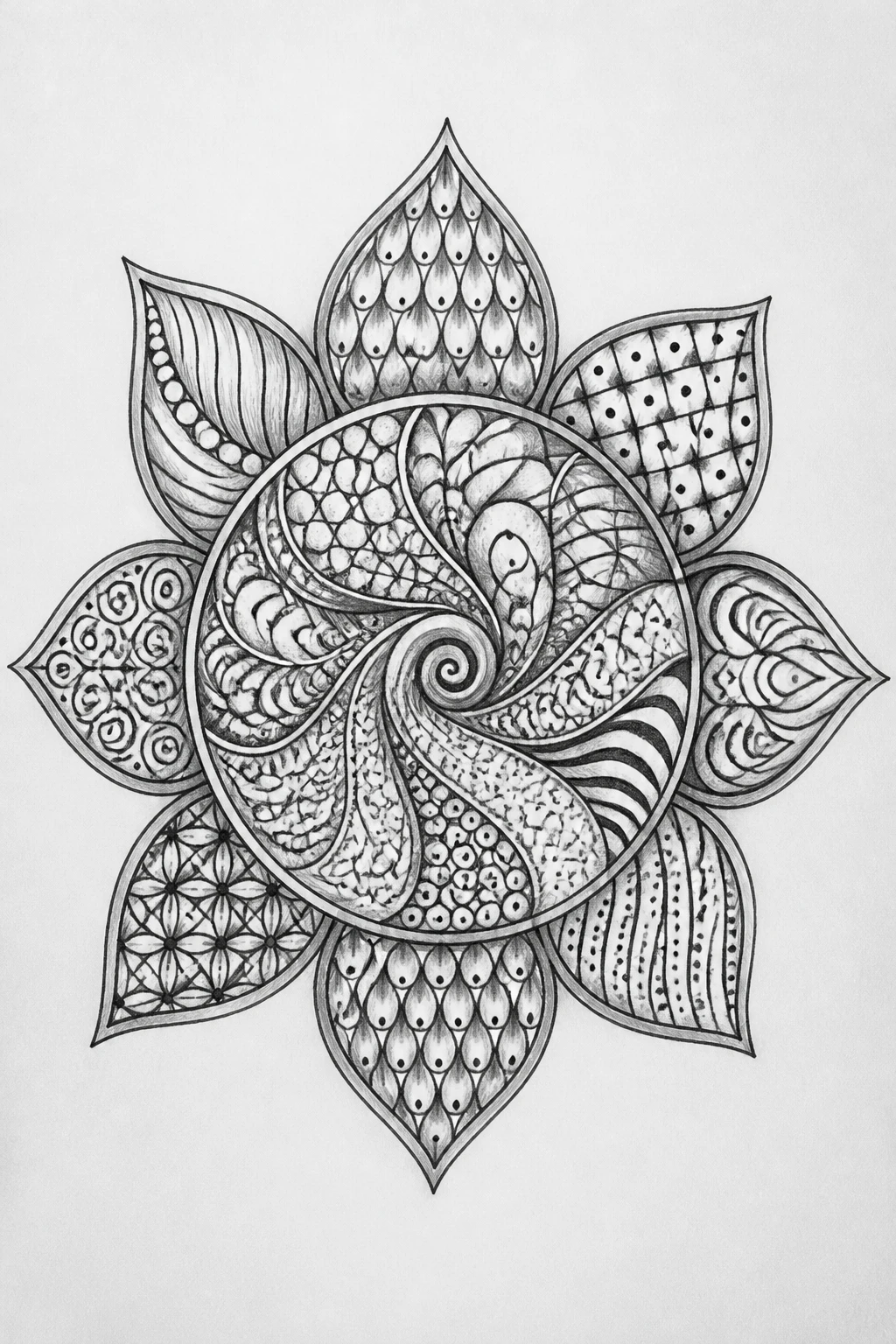
This idea slices a tiny mandala into one petal at a time, building a micro mandala that feels complete with minimal lines. It’s a great way to explore symmetry and rhythm without overwhelming detail.
How to Draw It
- Draw a small circle as the mandala base, then erase a portion to create a petal shape at the edge.
- Within each petal, create a repeatable mini pattern such as teardrop scales, parallel lines, or dot clusters.
- Arrange 6 to 8 petals around the circle, keeping the patterns harmonious in density and shape.
One compelling touch is to leave the central circle mostly blank while the petals bristle with pattern. It reads as a refined, meditative sketch that scales well for tiny zines or social captions.
7. Roller Coaster Ribbon Loop

A flowing ribbon that curls in a single line can become a striking Zentangle piece. The twist is maintaining a consistent width and turning the ribbon into a space for miniature tangles along its length.
How to Draw It
- Draw a long curved ribbon that loops across the page with gentle waves.
- Inside the ribbon outline, fill alternating segments with different patterns like zigzags, dots, and tiny waves.
- Keep the outer edge of the ribbon clean and bold to distinguish it from the internal textures.
The continuous line of the ribbon offers a hypnotic visual that is easy to recreate and instantly lends itself to a single clean pin or sticker sheet design.
8. Tiny Tessellated Cityscape
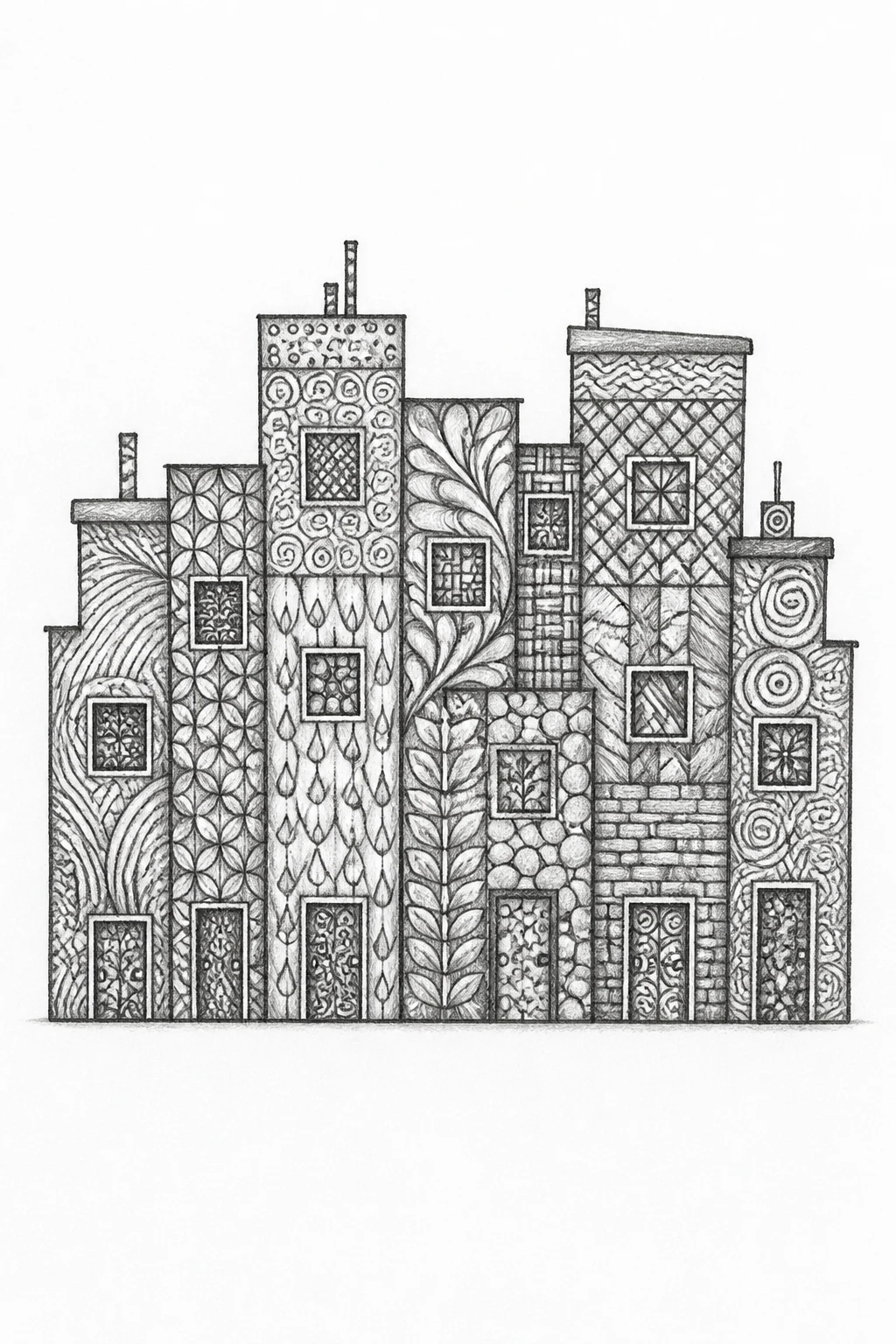
A compact skyline becomes a perfect canvas for tile like patterns. Use simple roof shapes and square windows as the negative space for interiors filled with tangles. The combination of a city silhouette and Zentangle textures is unexpectedly chic and highly shareable.
How to Draw It
- Draw a row of simple house silhouettes with flat roofs.
- In each building, section the facade into panels and fill with a different tangling motif per panel.
- Add tiny door and window accents to boost legibility without crowding.
When you keep the skyline compact and the interior patterns crisp, the piece reads as a modern decorative tile that translates well into social posts or printable coloring pages.
9. Floating Balloon Patterns
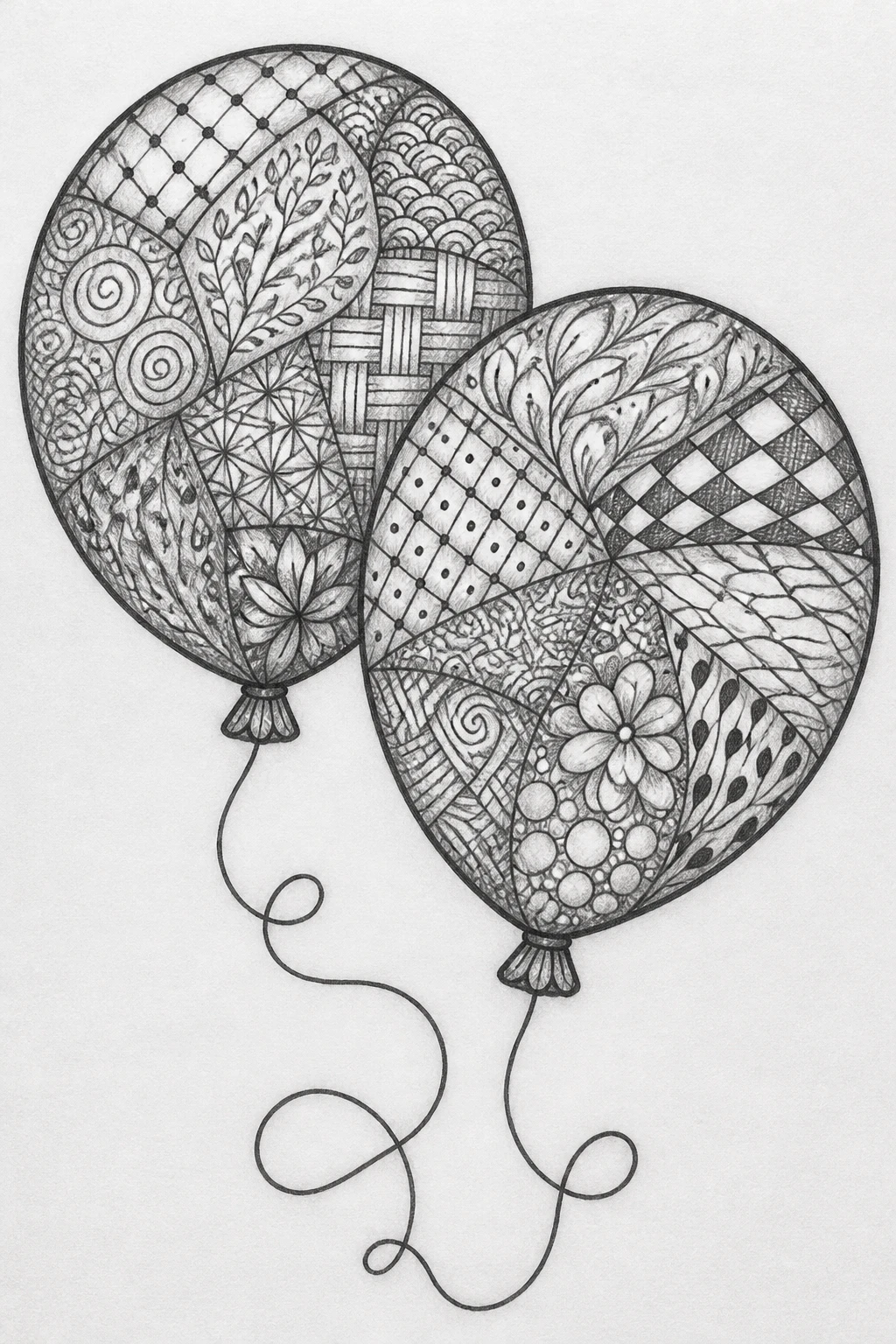
Balloon shapes are friendly and instantly recognizable, making them an excellent canvas for playful Zentangle fills. The rounded forms contrast beautifully with the linear patterns, and the trailing string adds a nice flow to the composition.
How to Draw It
- Draw one or two simple round balloons with light strings trailing down.
- Divide each balloon into sections and fill with distinct tangling patterns such as nets, hatch marks, or tiny leaves.
- Emphasize the balloon silhouette with a bold border and a small highlight to give volume.
Try varying the size and overlap of the balloons to create an airy, celebratory mood. This concept is highly adaptable for greeting cards, stickers, and micro doodle sets for Pinterest inspiration.
10. Compass Rose of Tiny Tiles
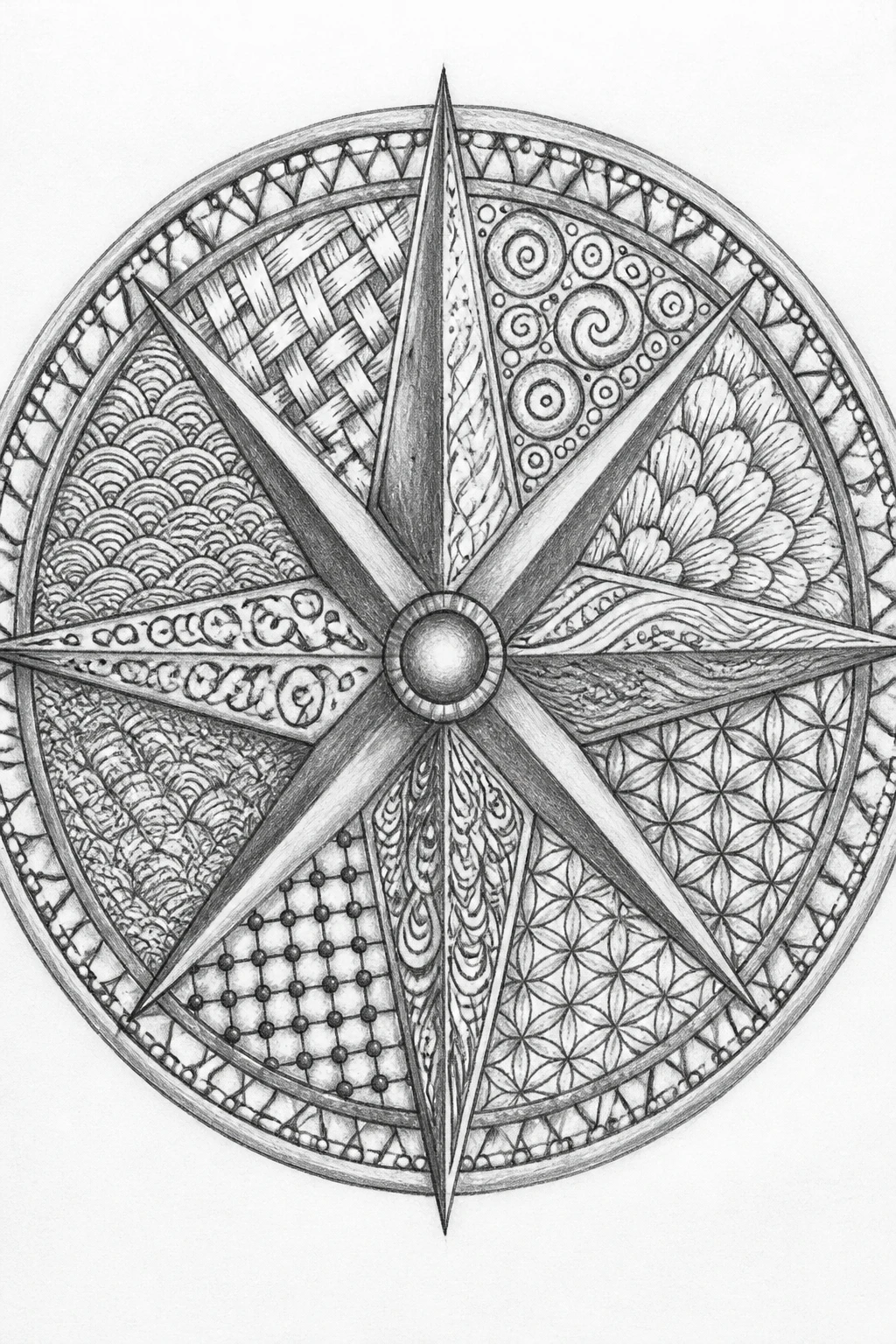
A compass rose provides a classic, geometric anchor for a series of tiny tiles. Each spoke can host a different micro pattern, producing a radial palette of textures that feels meditative and ordered at the same time.
How to Draw It
- Draw a small compass rose with clear cardinal directions, or keep it purely decorative with a central dot and radiating lines.
- In each of the wedge shapes, fill with a unique tiny pattern while keeping the wedge boundaries crisp.
- Highlight the outer ring to keep the radial composition clean and focused.
The result is a timeless, minimalistic piece that works beautifully as a tile inspired print, a sticker design, or a feature in a sketchbook spread.
You May Also Like:
15 Zentangle Tree Doodle Ideas for Nature-Inspired Art
14 Relaxing Zentangle Geometric Patterns to Try Today
12 Black and White Zentangle Ideas With Simple Lines
Elevate Your Zentangle Practice
Whether you are new to Zentangle inspired sketching or you have a growing library of doodles, a few practical tips can help you maximize the impact of these ideas. Start by focusing on silhouette clarity. A strong outline makes your subject instantly recognizable, even when the interior patterns are dense. This is especially important for social sharing where small thumbnails must still convey the idea at a glance.
Spacing and balance matter just as much as the patterns inside. Leave breathing room around each subject so your page doesn’t feel crowded. A little negative space helps each composition read as a complete, intentional piece rather than a piling of lines.
When composing your Zentangle pages, consider using a consistent line weight. A bold contour around each subject gives the patterns inside a polished, finished look and helps translate the design from the page to the screen. If you are coloring, decide if you want a monochrome vibe or a restrained color palette to keep the minimal aesthetic intact.
For beginners, printable coloring pages and sketchbook exercises can be a great way to practice. Try building a small set of patterns you like and reusing them in different combinations to evolve a personal Zentangle library. Pinterest friendly layouts often benefit from clean silhouettes, strong contrast, and limited, repeatable motifs that readers can easily replicate or remix.
Practical Tips
- Use a light pencil to map your composition before committing to ink.
- Keep your patterns contained within the subject boundary to preserve recognizability.
- Experiment with mirror symmetry for a more dynamic look, but avoid over complicating the interior that the silhouette becomes unclear.
- Document your process with quick notes about which patterns you used and why the composition works for you.
- Group a few favorite ideas into a mini zine or a set of social cards to showcase your Zentangle practice.
Pick Your Favorite and Start Drawing
These 10 Zentangle Sketchbook Ideas for Creative Practice offer a compact set of visually distinct subjects that stay true to a minimal and recognizable aesthetic. You do not need fancy supplies to get started; a pencil, a pen, and a willingness to experiment with line and rhythm are enough to unlock a world of calm, creative doodling.
Choose one idea that speaks to you, grab your sketchbook, and begin. As you practice, you will notice how small imperfections become part of the charm and character of your Zentangle pages. Feel free to adapt the designs to your own style while preserving the essential silhouette and pattern logic that makes each concept instantly readable.
Conclusion: Start Small, Dream Big, Draw Today
These Zentangle sketchbook ideas are designed to be approachable yet striking, so you can add a little magic to your daily practice without feeling overwhelmed. By focusing on distinct subjects with clear silhouettes and simple patterns, you can build a library of pins, pages, and prints that feel cohesive and personal.
Now it is your turn. Pick a favorite idea from the list, gather your drawing supplies, and start a new page in your sketchbook. Remember that progress over perfection is the goal here, and the quiet act of drawing itself is part of the practice. If you love what you create, save the article for later or share it with a friend who enjoys doodling and tangles.

Hi, I’m Abdul Moeed Shahid, the creator of Sketch and Fun. I’m passionate about helping people of all ages explore their creativity through fun drawing ideas and printable coloring pages. My goal is to make art simple, accessible, and enjoyable for everyone!